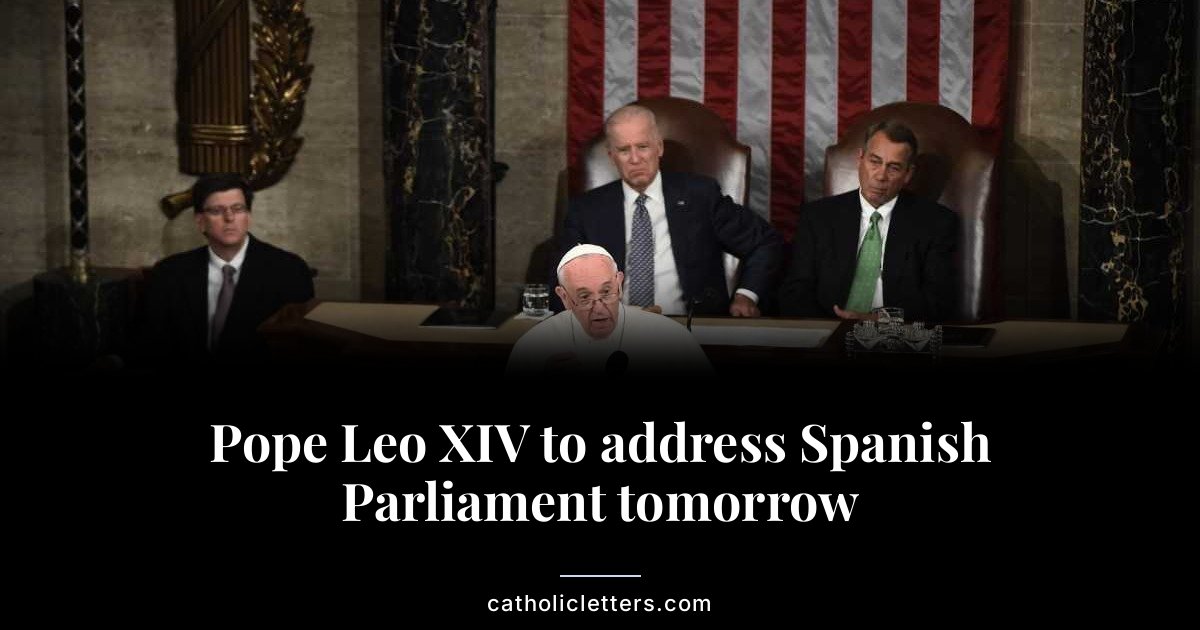
Pope Leo XIV will address Spain’s Cortes (parliament) on Monday, June 8, in what will be one of the defining moments of his apostolic journey to Madrid. The full report from Aleteia explores how papal addresses to national legislatures have become a unique platform for articulating the Church’s voice in the public square. For Catholics watching Leo XIV’s first major international trip, this parliamentary address offers a window into how the new Pope will engage with secular governance.
What happened
Pope Leo XIV arrives in Madrid for a three-day apostolic visit. On Monday morning, he will deliver an address to the Cortes, Spain’s bicameral parliament. This marks his first address to a national legislature since his election in May 2025.
Papal addresses to parliaments are a relatively recent tradition. While popes have long met with heads of state privately, speaking before full legislative assemblies became common only in the late 20th century. Pope John Paul II addressed the United Nations General Assembly in 1979 and 1995, setting a precedent for papal engagement with democratic institutions.
Read Aleteia’s full report for historical context on this form of papal diplomacy.
Why this matters
These parliamentary addresses allow popes to speak directly to lawmakers about human dignity, religious freedom, and the common good without engaging in partisan politics. The setting is inherently public and symbolic: a religious leader addressing the secular authority in its own chamber. For Leo XIV, an American with decades of missionary experience in Latin America before his election, this first parliamentary address will signal his priorities for Church-state dialogue.
Spain has a complicated history with the Church, from the Franco era’s close identification between throne and altar to the rapid secularization of recent decades. How Leo XIV navigates that history while speaking to a diverse legislative body will set the tone for his papacy’s approach to European secularism.
For Catholic readers
If you want to understand how the Church engages democratic institutions, watch for the text of Monday’s address on Vatican.va. Pray for Pope Leo XIV as he represents Christ’s message in the halls of secular power, and for the lawmakers who will hear him.
Sources:
1. Aleteia — original report