The Vatican employs hundreds of people in roles you won’t find anywhere else on earth. From Apostolic Palace corridors to the highest scaffolding of St. Peter’s Basilica, these positions carry centuries of tradition and surprisingly specific job descriptions. Aleteia’s recent feature explores several of these roles, and we’re breaking down what Catholic readers should know about the people who keep the world’s smallest state running.
What these jobs actually are
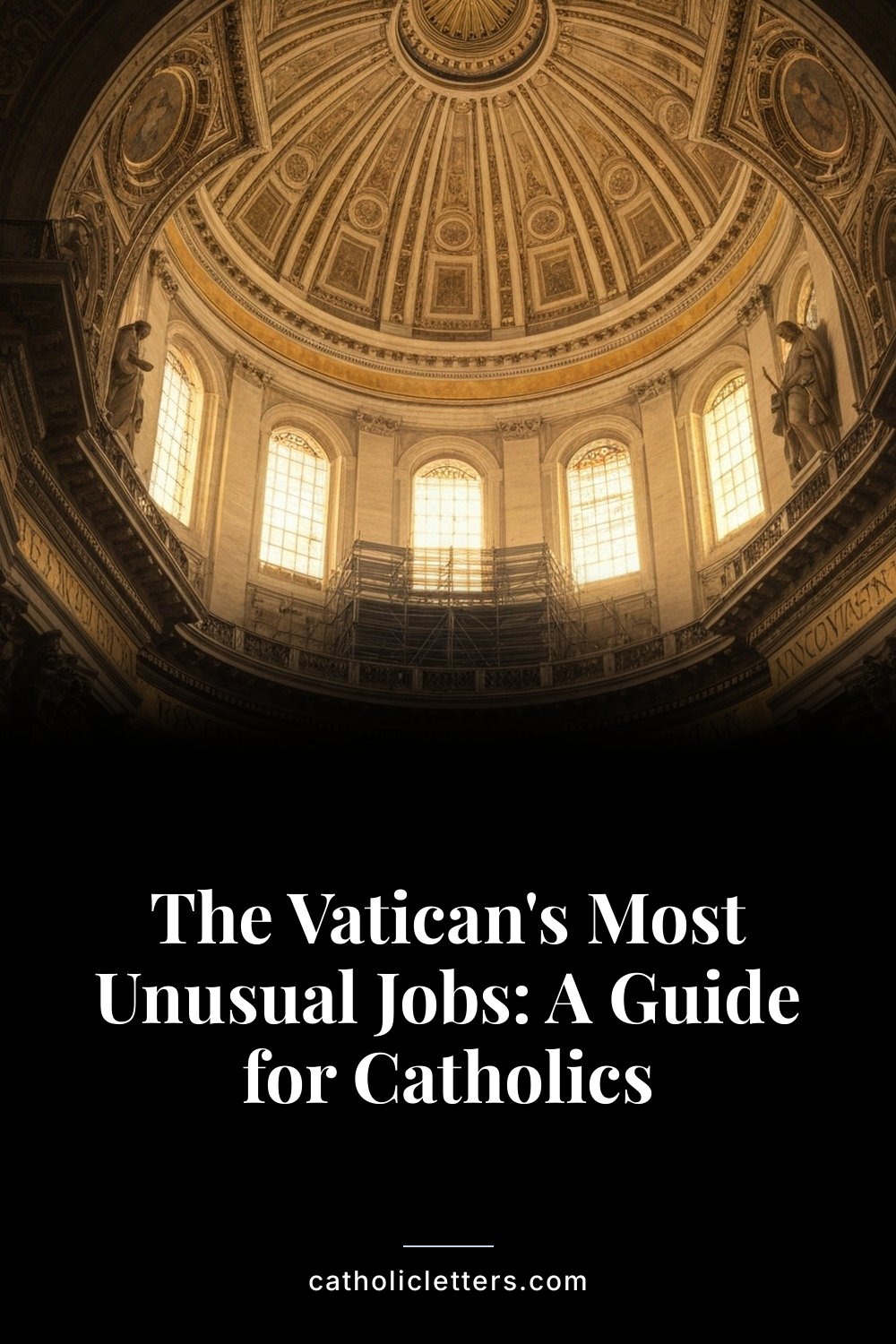
The Vatican’s workforce includes roles with medieval-sounding titles that still serve essential functions today. The Sampietrini, for example, are the specialist technicians who maintain St. Peter’s Basilica itself, from the dome’s structural integrity to the marble floors below. Their work requires both engineering expertise and reverence for the sacred space they’re preserving.
Other historic positions include the papal sacristan, who prepares everything the Pope needs for liturgical celebrations, and the prefect of the papal household, who manages the Pope’s daily schedule and audiences. Many of these roles have existed for centuries, their responsibilities evolving with each papacy while maintaining core duties rooted in service to the Church’s visible head.
The full Aleteia article details several other positions, including archivists, restorers, and security personnel whose work combines specialized training with an understanding of Catholic tradition.
Why this matters
These jobs reveal something important about how the Church operates: continuity matters. The Vatican doesn’t replace centuries-old positions with generic modern titles because the roles themselves carry institutional memory. A Sampietrino isn’t just a maintenance worker; he’s part of an unbroken line of craftsmen who’ve cared for St. Peter’s since its completion in 1626.
This approach to work reflects Catholic teaching about human dignity and vocation. Every task, from cleaning marble to cataloging manuscripts, serves the Church’s mission when done with skill and reverence. The Vatican models this by preserving specialized roles rather than consolidating them into efficiency-driven departments.
For Catholic readers
Next time you visit St. Peter’s Basilica or watch a papal Mass on television, look for the people working behind the scenes. The man adjusting the Pope’s vestments, the technician checking microphones, the guard directing pilgrims are all part of this centuries-old workforce. Their vocations remind us that the Church needs both prayer and practical expertise, both contemplation and capable hands.
Consider how your own work, however ordinary it might seem, serves God’s purposes when offered with intentionality. The Sampietrini climbing St. Peter’s dome aren’t doing generic construction work; they’re stewarding a sacred space. Your work can be equally consecrated, whatever form it takes.
Sources: 1. Aleteia — original feature on Vatican jobs