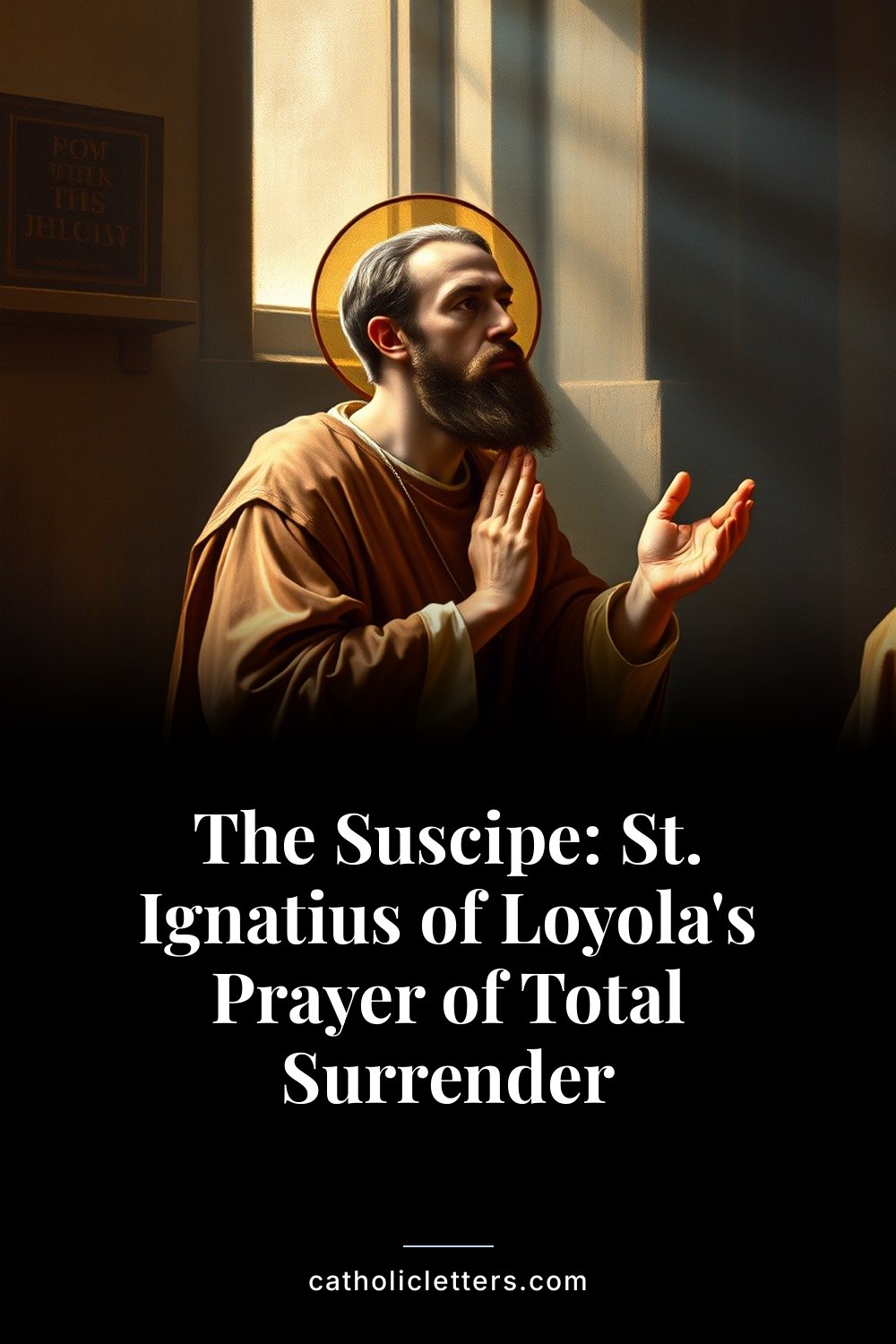
The Suscipe (Latin for “receive”) is St. Ignatius of Loyola’s prayer of radical surrender, written in 1548 near the end of his life. It closes his Spiritual Exercises, a retreat manual that has shaped Catholic discernment for nearly five centuries. Pray it when you are gripping too tightly to an outcome, a relationship, or a plan you need to offer back to God.
Take, Lord, and receive all my liberty, my memory, my understanding, and my entire will, all that I have and possess. Thou hast given all to me. To thee, O Lord, I return it. All is thine; dispose of it wholly according to thy will. Give me thy love and thy grace, for this is sufficient for me.
St. Ignatius of Loyola, 1548
How this prayer works
The Suscipe asks God to take back everything: not just possessions, but the faculties Ignatius names specifically (liberty, memory, understanding, will). These are the powers by which we plan, choose, and control. The prayer acknowledges that God gave them first, and now returns them. The final petition is not for health, success, or clarity, but for love and grace alone.
Ignatius wrote the Suscipe after founding the Society of Jesus and watching his missionary sons scatter to the edges of the known world. He knew what it cost to let go. The prayer is not resignation but active offering: hands open, not hands empty.
Pray the Suscipe slowly before a major decision (a job change, a move, a vocation), or when anxiety reveals you have been trying to control what belongs to God. Say it once in the morning, then carry the final line through the day: “Give me thy love and thy grace, for this is sufficient for me.”
Return to it when you need to loosen your grip.