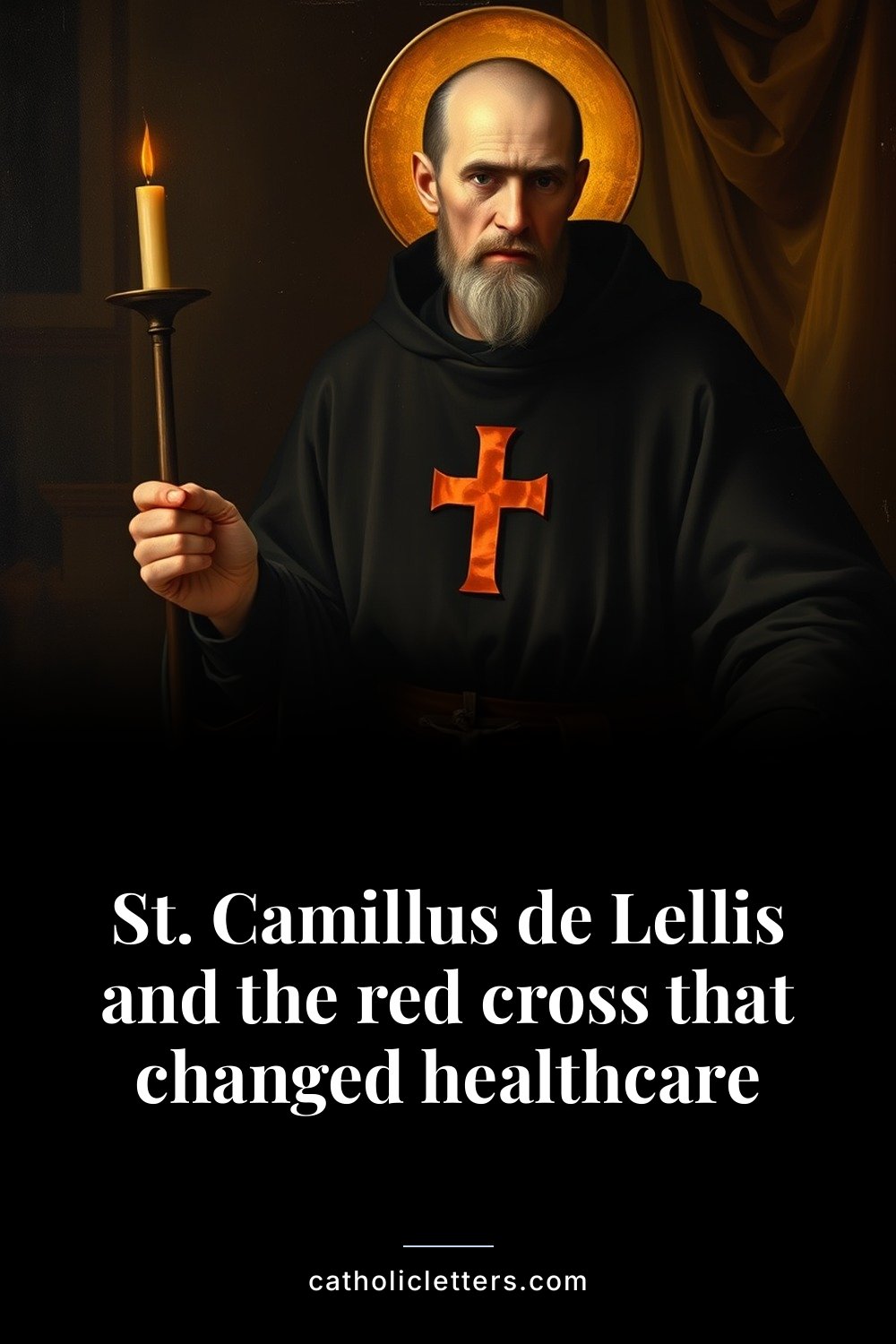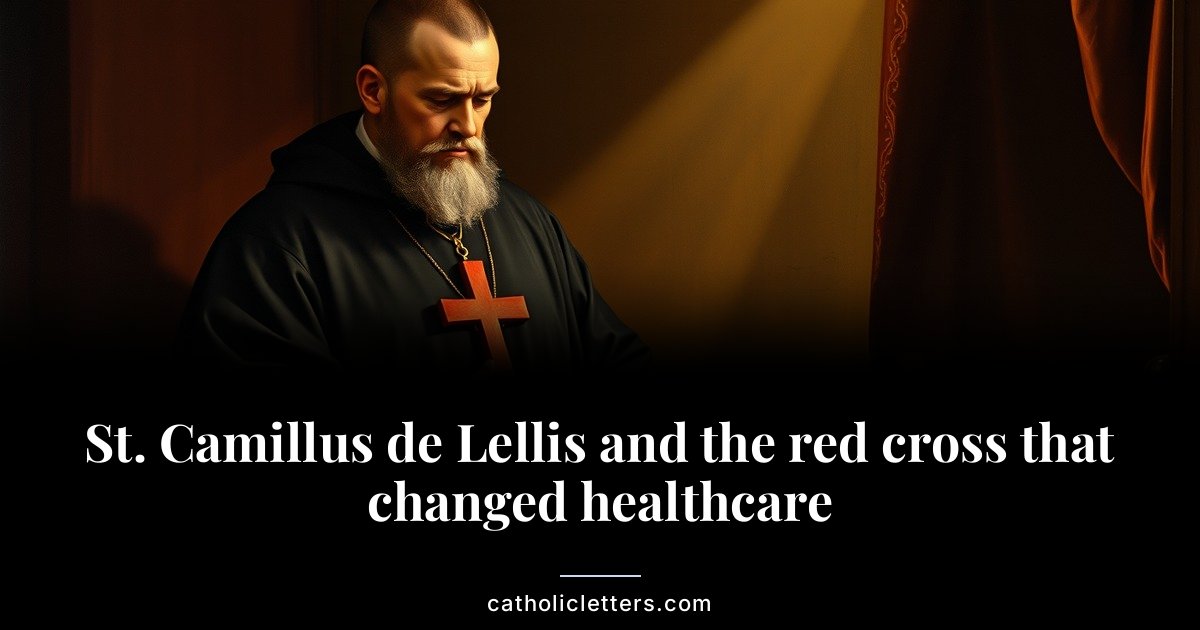
Today the Church remembers St. Camillus de Lellis, whose Optional Memorial falls on July 14. This towering ex-soldier turned the care of the sick into a sacred vocation and gave us the red cross symbol that marks hospitals worldwide. If you’ve ever wondered who first made nursing a spiritual calling, you’re looking at him.
Who St. Camillus de Lellis was
Camillus was born in 1550 in the Kingdom of Naples, son of a mercenary. He grew to six foot six, fought as a soldier, and gambled away everything he owned by age 25. Working as a laborer at a Capuchin friary, he experienced conversion and tried twice to join the Capuchins, but chronic leg wounds from his military days kept him out. He ended up as a patient at Rome’s San Giacomo Hospital, a place so filthy and neglectful that patients routinely died of infections rather than their original illnesses.
Camillus stayed. He became a nurse, then administrator, and in 1584 he founded the Ministers of the Sick, later called the Camillians. His rule was simple: treat every patient as Christ himself. His brothers wore black cassocks marked with a large red cross, the symbol he chose to identify them in plague-stricken streets. That red cross became the template for the modern medical symbol, predating the Red Cross organization by nearly three centuries.
He died in Rome on July 14, 1614. Pope Benedict XIV canonized him in 1746 and declared him patron of the sick and of hospitals. Pope Pius XI added nurses to his patronage in 1930.
What he’s known for
Camillus revolutionized healthcare by insisting on cleanliness, ventilation, and isolation of infectious patients at a time when medicine barely acknowledged contagion. He required his religious brothers to take a fourth vow beyond poverty, chastity, and obedience: perpetual service to the sick, even in plague. During Rome’s 1590 plague outbreak, he and his brothers went into quarantined zones when others fled.
The red cross he wore is his most recognizable attribute. He chose it so the sick could spot his brothers instantly in crowds, during battles, or in disaster zones. The crucifix he carried wasn’t decorative; he held it before dying patients and prayed the prayers for the dying, often staying through the night. He saw Christ’s face in every infected wound and fevered brow, and he made his brothers see it too.
For today
If you’re caring for someone sick today, whether a parent, a child, or yourself, do one task with Camillus’s eyes: change the sheets as if for Christ, bring the water as if to Christ, sit in the silence as if keeping vigil with Christ. It takes no extra time. It changes how the task feels in your hands.
Let his red cross mark your work today.