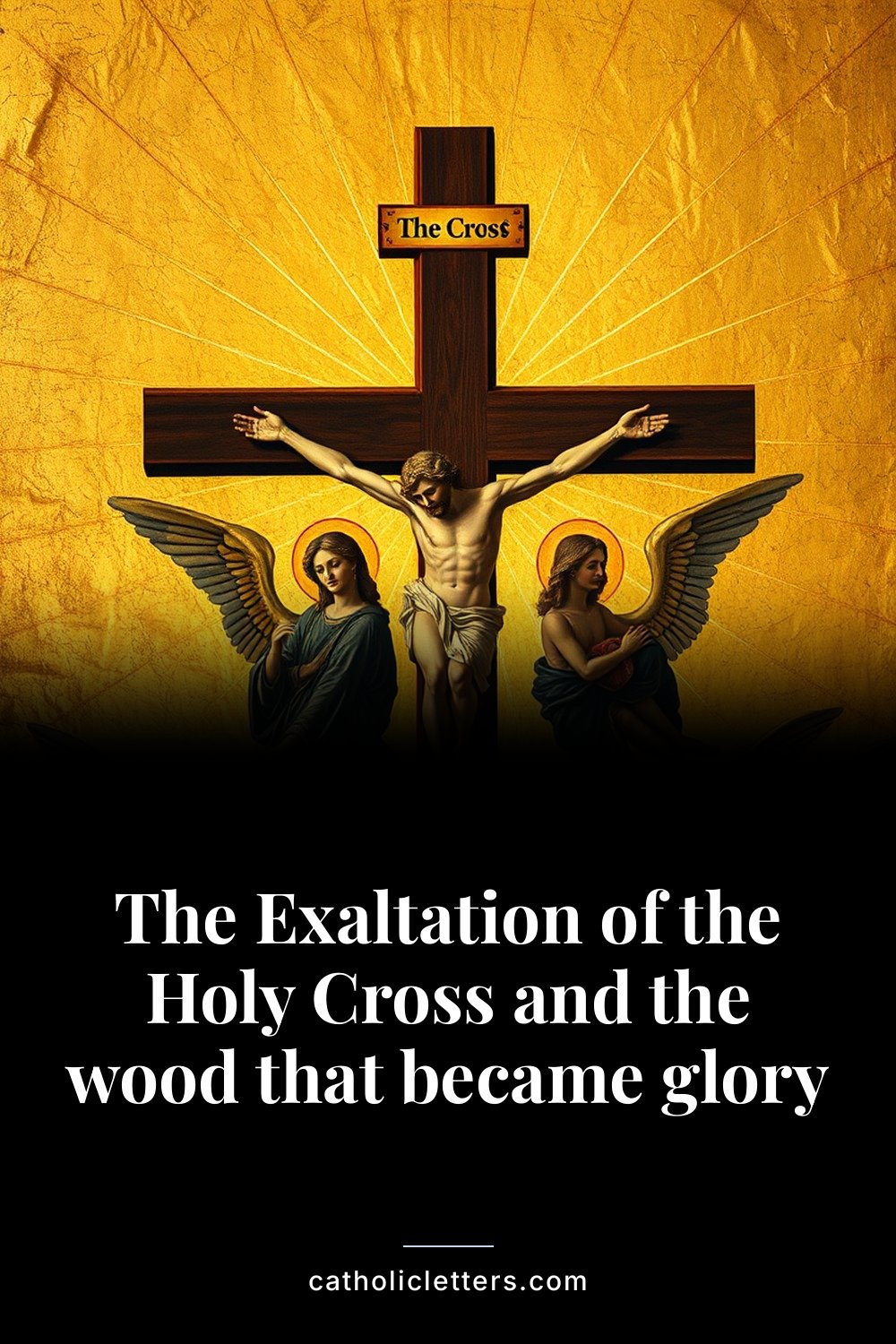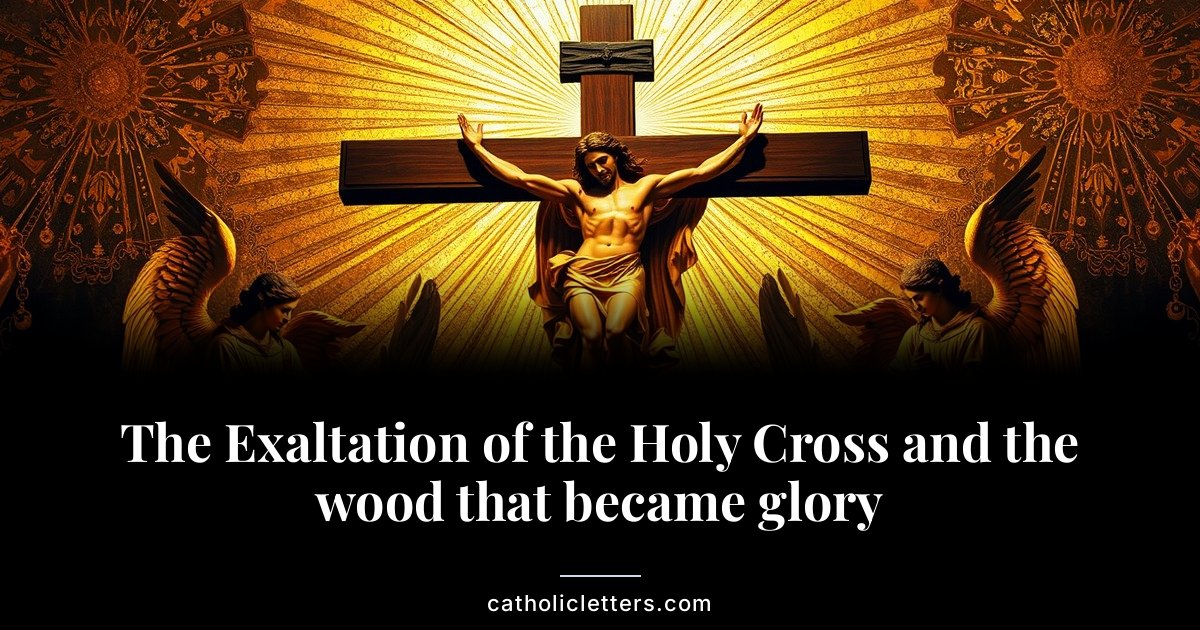
The Church celebrates a Feast today: the Exaltation of the Holy Cross. This ancient commemoration honors not a person but the instrument of our redemption, the wood on which Christ died and which the Church venerates as the sign of our salvation. For a reader in 2026, this feast is a chance to see the Cross not as defeat but as victory.
What the feast celebrates
This feast traces back to September 14, 335, when the Church of the Holy Sepulchre in Jerusalem was dedicated. The basilica was built over the site where St. Helena, mother of Emperor Constantine, discovered the True Cross in 326. That September dedication became the principal feast of the Cross in both East and West. A second commemoration on May 3 marked Helena’s finding of the relic itself.
The “exaltation” refers to the ancient liturgical gesture of lifting the relic of the True Cross high so the faithful could venerate it. The Bishop of Jerusalem would raise the wood while the congregation sang Kyrie eleison. This lifting up echoed Christ’s own words: “When I am lifted up from the earth, I will draw all men to myself” (John 12:32, RSV-CE).
In 628, Emperor Heraclius recovered the True Cross from Persian captors and returned it to Jerusalem in triumph. The Church absorbed that victory into the September feast. By medieval times, the Exaltation had become a major solemnity throughout Christendom, celebrated with processions and the public veneration of cross relics.
What the Cross means
The Cross is paradox: an instrument of Roman torture that became the Church’s central symbol of hope. The wood that bore God’s death becomes the tree of life. Early Christians saw this prefigured in the bronze serpent Moses lifted in the desert (Numbers 21:8-9), which healed those who looked upon it. Christ himself made the connection explicit.
The Church’s tradition identifies the Cross with the tree in Eden. Medieval hymns sing of the wood that bore forbidden fruit now bearing the fruit of salvation. The iconography of this feast shows the Cross surrounded by golden rays, angels in adoration, and sometimes Adam’s skull at its base, signifying that the second Adam undoes the first Adam’s fall on the very wood that represents both sin and redemption.
For today
Make the Sign of the Cross slowly three times today. Once when you wake, once at midday, once before sleep. Touch your forehead, your heart, your shoulders with intention. Say the words aloud: “In the name of the Father, and of the Son, and of the Holy Spirit.” Let your body remember what the gesture means: that you are marked by the wood of victory, not defeat.
Carry the sign through the day.