Today the Church celebrates the Conversion of St. Paul, a feast marking the moment when Christianity’s greatest persecutor became its greatest missionary. This is the story of a man knocked off his horse by a blinding light, a three-day blindness that became sight, and a life completely reversed in direction.
Who Saul of Tarsus was
Before his conversion around 34 AD, Saul was a Pharisee from Tarsus in Cilicia, educated under the rabbi Gamaliel in Jerusalem. He held the cloaks of those who stoned Stephen, the first Christian martyr, and “breathing threats and murder against the disciples of the Lord” (Acts 9:1, RSV-CE), he secured letters from the high priest authorizing him to arrest Christians in Damascus. He was not a casual opponent. He was hunting them down.
On the road to Damascus, a light from heaven flashed around him. He fell to the ground and heard a voice: “Saul, Saul, why do you persecute me?” When he asked who was speaking, the voice said, “I am Jesus, whom you are persecuting” (Acts 9:4-5). The men traveling with him heard the sound but saw no one. Saul rose from the ground blind.
For three days he remained without sight in Damascus, neither eating nor drinking. A disciple named Ananias, sent by vision from the Lord, came to him, laid hands on him, and said, “Brother Saul, the Lord Jesus who appeared to you on the road by which you came, has sent me that you may regain your sight and be filled with the Holy Spirit” (Acts 9:17). Immediately something like scales fell from his eyes, and he was baptized.
What he became
From that moment, Saul became Paul, the Apostle to the Gentiles. He who had persecuted the Church now preached Christ in the synagogues. He planted churches across Asia Minor, Greece, and Rome. He wrote at least thirteen letters that form the backbone of Christian theology. He was beaten, shipwrecked, imprisoned, and eventually martyred in Rome around 67 AD.
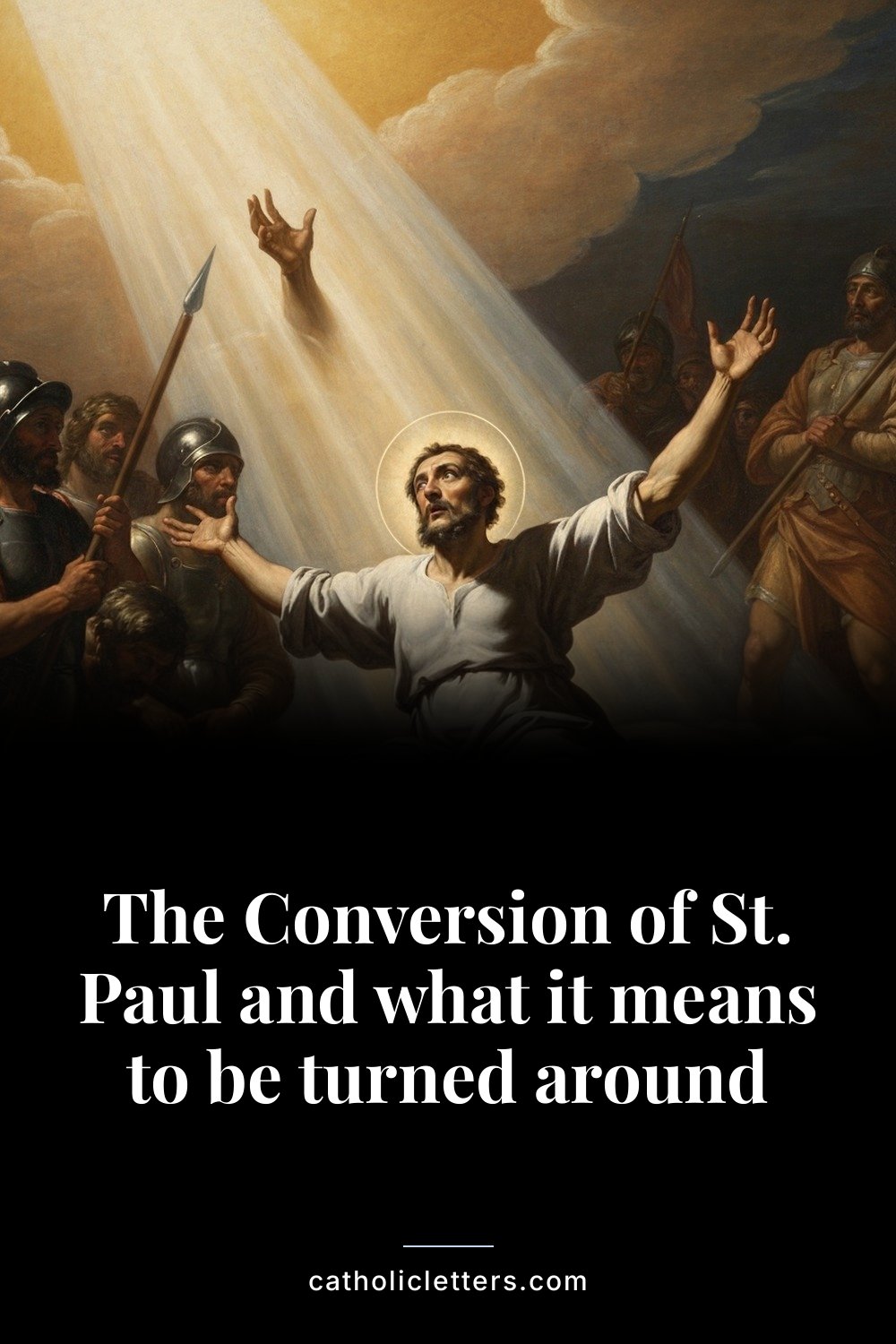
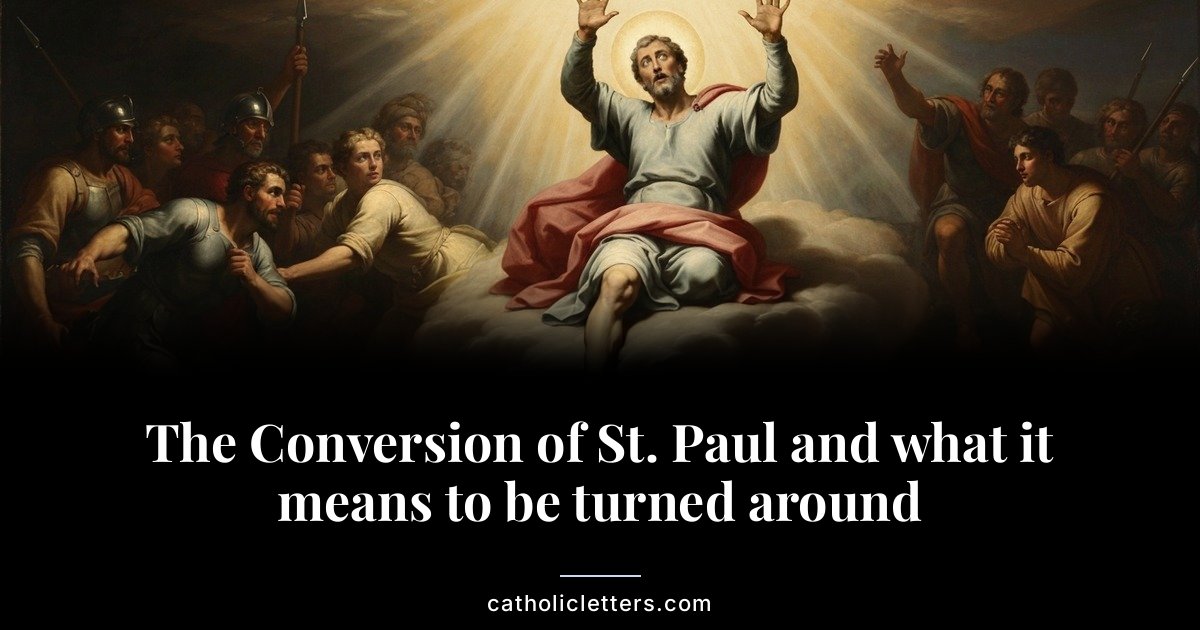
The iconography of his conversion shows him fallen from a horse, struck by a beam of divine light, hands raised in shock or surrender. The horse is not mentioned in Acts but appears consistently in art because it captures the violence of the reversal: a man of action, of authority, unhorsed, helpless, addressed by name by the One he thought he was defending God against. The light is not metaphorical. It blinded him. The road to Damascus is not a symbol. It is the place where his life split in two.
For today
Ask yourself: What am I traveling toward with absolute certainty that might be the wrong road? Paul thought he was serving God by destroying the Church. His zeal was real, his certainty total, and he was completely wrong. Conversion is not always from vice to virtue. Sometimes it is from one good to a greater good, or from a mistaken righteousness to the true one.
Pray the words Ananias spoke: “Brother Saul, the Lord Jesus has sent me that you may regain your sight.” Ask to see what you have been blind to. Ask for the scales to fall. And if you have been on the wrong road, ask for the courage to turn around today, not tomorrow.
Carry his name as you travel your own roads.