Today the Church honors St. Joseph the Worker, an optional memorial established in 1955 by Pope Pius XII. This feast celebrates the foster father of Jesus not as the silent figure of Christmas pageants, but as the working man who taught Christ a trade, kept a household, and sanctified daily labor through fidelity.
Who St. Joseph the Worker was
Joseph of Nazareth lived in first-century Galilee as a carpenter (Greek: tekton, meaning craftsman or builder). The Gospels tell us little about his life: he was betrothed to Mary, accepted the angel’s message about her miraculous conception, protected the Holy Family’s flight into Egypt, and brought the twelve-year-old Jesus to Jerusalem. After that, he disappears from the Gospel narrative. Tradition holds he died before Christ’s public ministry began, dying in the arms of Jesus and Mary.
What we know with certainty is this: for roughly thirty years, Jesus lived under Joseph’s roof. The carpenter’s son learned to measure wood, drive pegs, plane boards smooth. Joseph taught him more than carpentry. He taught him what faithful work looks like, what it means to provide for a family, how to pray the Shema at dawn before the sawdust started flying.
The Church venerates Joseph as patron of the universal Church, protector of families, and patron of workers. He is the saint of the hidden life, the long obedience in the same direction.
What he’s known for
Joseph’s spirituality is the spirituality of presence. He speaks not a single recorded word in Scripture. He acts. He obeys. He works. He stays. When the angel warns him in dreams, he rises and goes. When Mary needs protecting, he marries her. When the Child needs feeding, he works the wood.
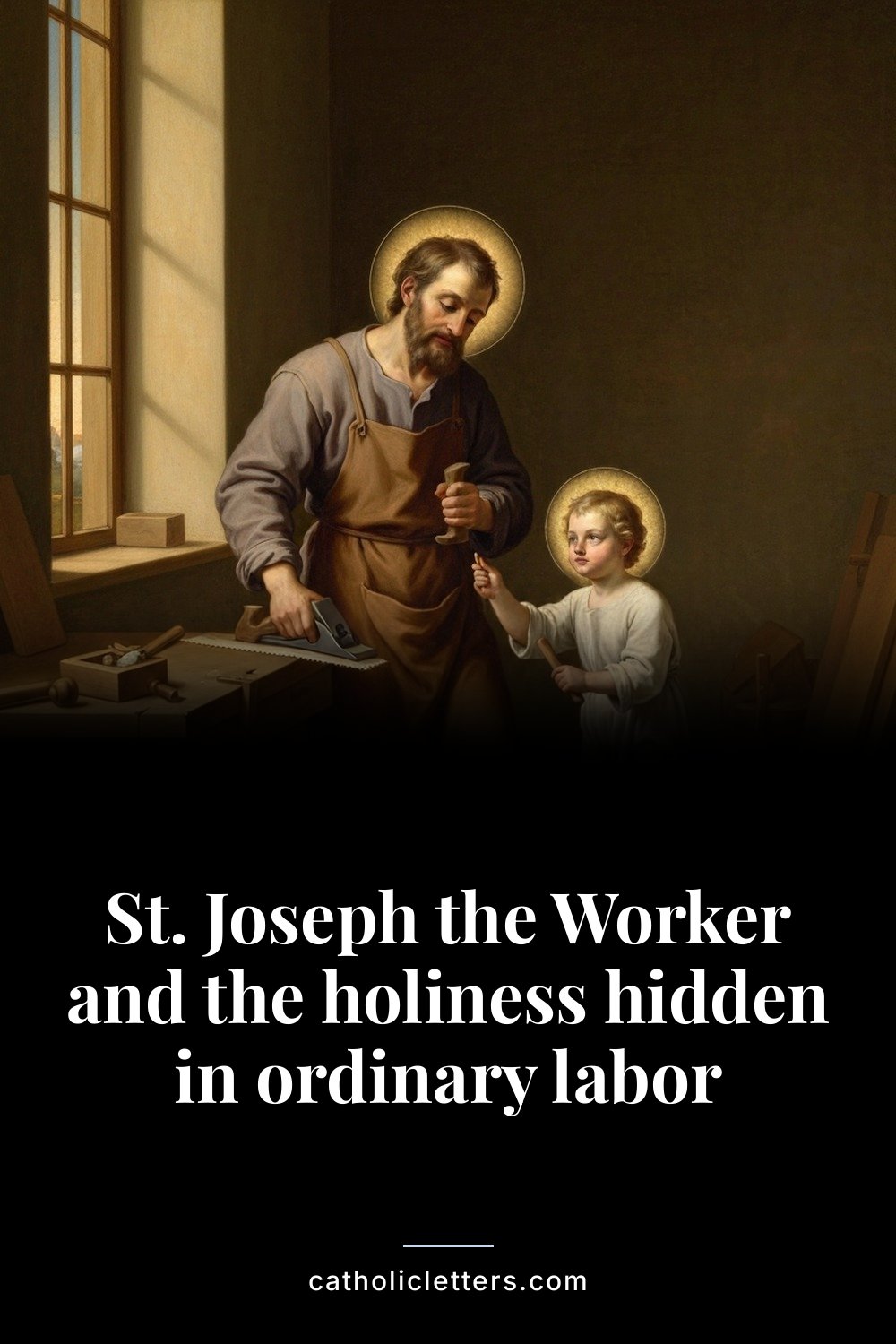
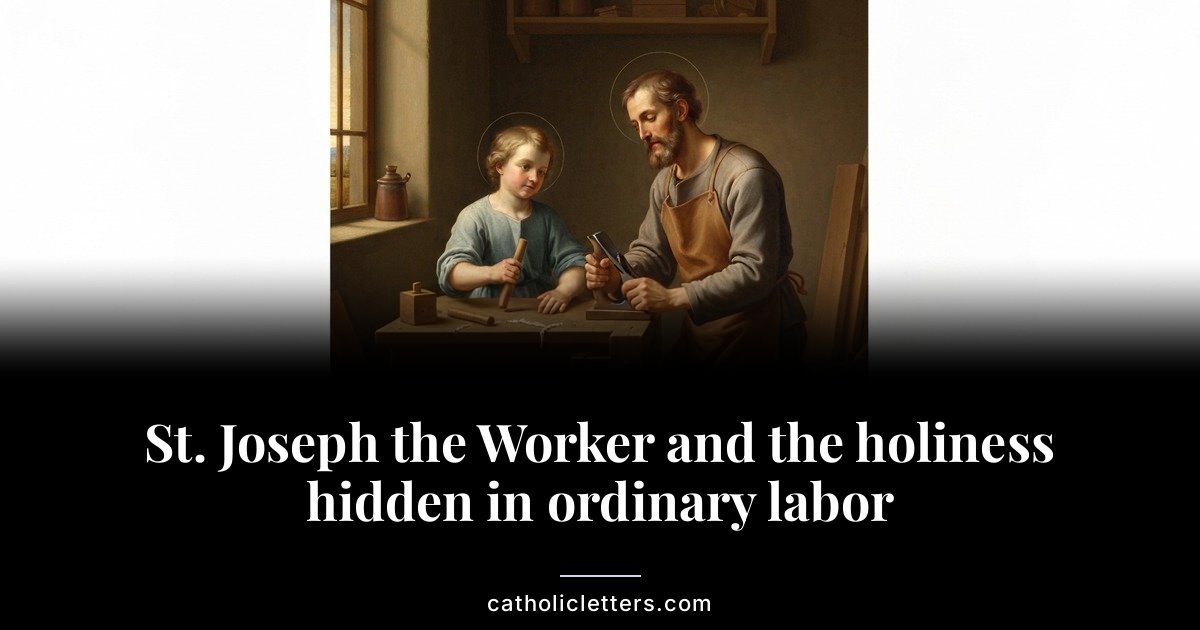
He is depicted with a carpenter’s plane and tools, often wearing a brown apron, sometimes with the child Jesus at his workbench, handing him a tool or sweeping shavings. These images tell the truth about holiness: it happens in workshops. It happens in the sixth hour of the same task you did yesterday. It happens when you teach a child to do something right.
Pope Pius XII established this May 1st feast (transferred to June 18 in some regions due to local observances) to reclaim the dignity of labor from ideologies that reduced workers to cogs or to revolutionary fodder. Joseph’s labor was neither oppressed nor glorified. It was faithful. It was enough.
For today
Before you start your work today, whether paid or unpaid, public or private, ask St. Joseph to help you see it as he saw his: as the place where you meet God’s will. Not your life’s meaning, not your identity, just today’s obedience. If your work feels small, remember he planed boards while the Word became incarnate under his roof. If your work feels hard, remember he fled to Egypt with a newborn and started over.
Pray one sentence before you begin: “St. Joseph, help me work faithfully today.”
Carry his name through the hours.