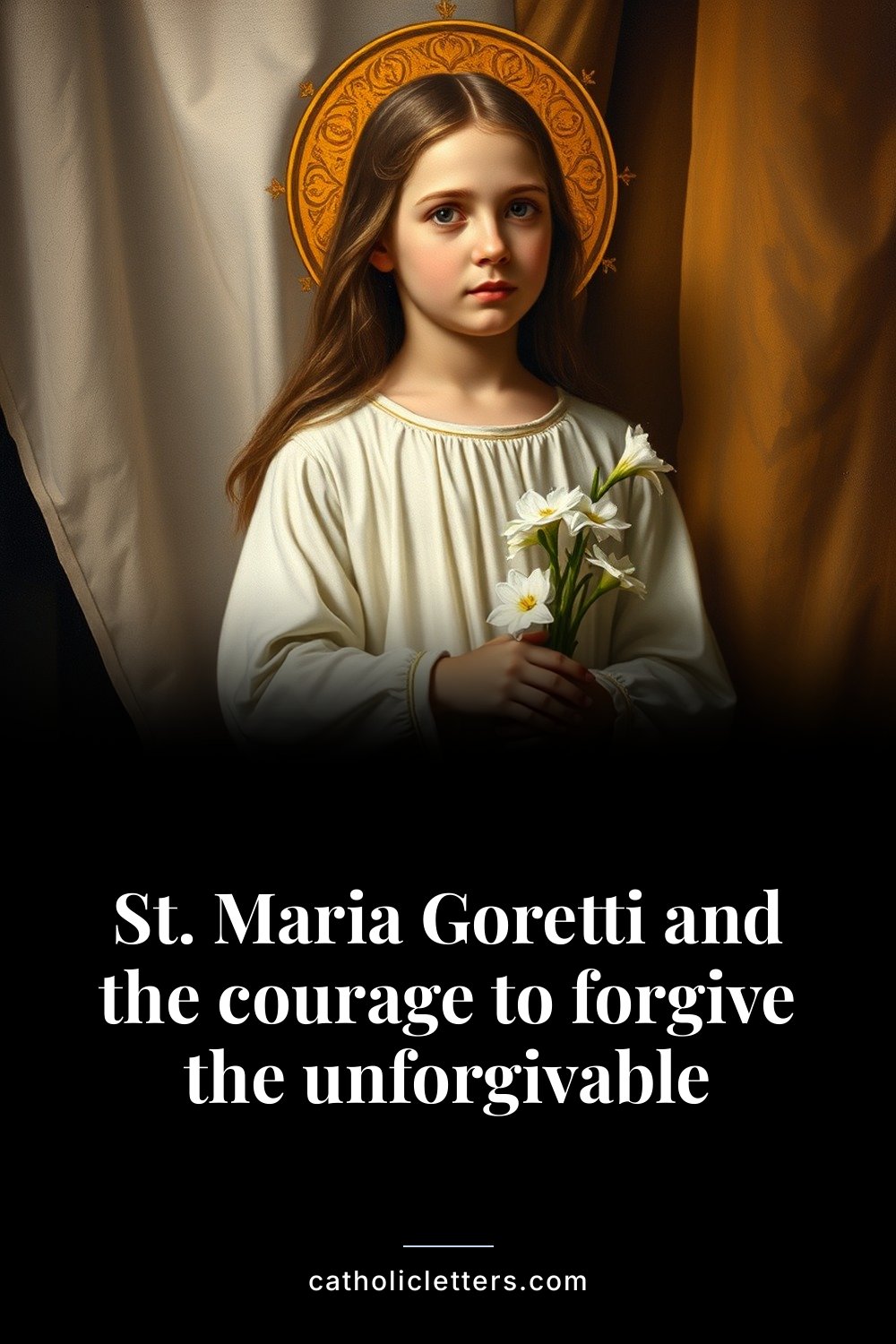
Today’s optional memorial honors St. Maria Goretti, the 11-year-old Italian girl who became a martyr of purity in 1902 and a witness to radical forgiveness. In 2026, when teenage girls face pressures their great-grandmothers couldn’t imagine, Maria’s story cuts through: here was a child who said no when it cost everything, and yes to mercy when hatred would have been easier.
Who St. Maria Goretti was
Maria Teresa Goretti was born October 16, 1890, in Corinaldo, Italy, to a poor farming family. After her father’s death from malaria in 1900, the family moved to Ferriere di Conca, where they sharecropped land and shared living quarters with another family, the Serenellis. Maria, the eldest daughter, took on household duties while her mother worked the fields. She was preparing for her First Communion when she died.
On July 5, 1902, 19-year-old Alessandro Serenelli attacked Maria while she was mending a shirt. He had made advances before; she had refused. This time he attempted rape. When she resisted, crying that it was a mortal sin and he would go to hell, he stabbed her fourteen times with an awl. She died the next afternoon, July 6, after forgiving him and saying she wanted to see him in heaven.
Alessandro was sentenced to thirty years in prison. For the first years he remained hardened. Then in 1910, he had a vision of Maria offering him fourteen lilies, one for each wound. He converted, repented, and after his release worked as a gardener in a Capuchin monastery. He attended Maria’s canonization in 1950, the only murderer known to witness his victim declared a saint.
What she’s known for
Maria is venerated as a martyr of purity, not because she valued virginity more than life, but because she understood that sin destroys the one who commits it. Her concern in her final moments wasn’t self-preservation but Alessandro’s soul. The Church beatified her in 1947 and canonized her three years later, with her mother and Alessandro both present in St. Peter’s Square. Over half a million attended.
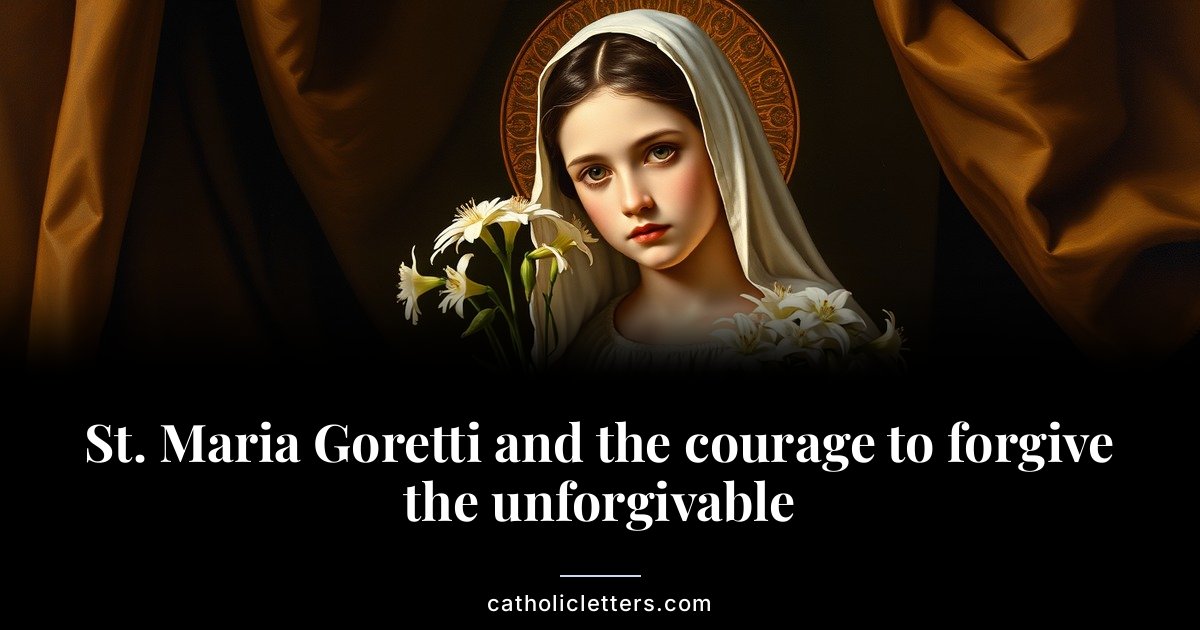
The fourteen lilies in her iconography represent the fourteen stab wounds she received. White lilies symbolize purity in Christian art, but Maria’s lilies also represent the grace that flows from suffering offered in love. Her white dress is the traditional garment of virgin martyrs, dating to early Christian imagery of the martyrs clothed in white robes in heaven. The dagger or awl appears as a martyr’s attribute, identifying the instrument of her death.
For today
Maria’s last words were “I forgive him, and I want him to be with me in heaven.” Think of one person today you find hard to forgive. You don’t need to reconcile with them or even tell them. But pray one Our Father for them by name. If that feels impossible, pray it anyway. Forgiveness isn’t a feeling. It’s a decision to stop nursing the wound.
Carry her fourteen lilies through the day.