Today the Church celebrates St. Ignatius of Loyola, founder of the Society of Jesus, with a Memorial. The man who built the largest religious order in the Catholic Church started as a vain Spanish soldier until a French cannonball shattered his leg and his ambitions in 1521.
Who St. Ignatius of Loyola was
Born Íñigo López de Loyola in 1491 in the Basque Country of Spain, he grew up dreaming of military glory and romance. He served as a courtier and soldier, ambitious for worldly honor. At the siege of Pamplona in 1521, a cannonball struck his legs. The injury required multiple surgeries and left him bedridden for months.
During recovery at his family castle in Loyola, he asked for chivalric romances to pass the time. The only books available were a life of Christ and a collection of saints’ lives. Reading them, he noticed something: worldly fantasies left him dry and restless, while thoughts of serving God brought lasting peace. This simple observation became the foundation of his method of spiritual discernment.
After his conversion, Ignatius spent a year in prayer at Manresa, where he experienced visions and began writing what would become the Spiritual Exercises. He studied theology in Paris, gathered six companions, and in 1540 Pope Paul III approved their new order. Ignatius died in Rome on July 31, 1556. He was canonized in 1622.
What he’s known for
The Spiritual Exercises remain Ignatius’s most influential legacy. This manual for a 30-day silent retreat guides a soul through meditation on sin, the life of Christ, and discernment of God’s will. The method is intensely practical: examine your thoughts, notice where you find peace or desolation, choose accordingly. It has shaped Catholic spirituality for five centuries.
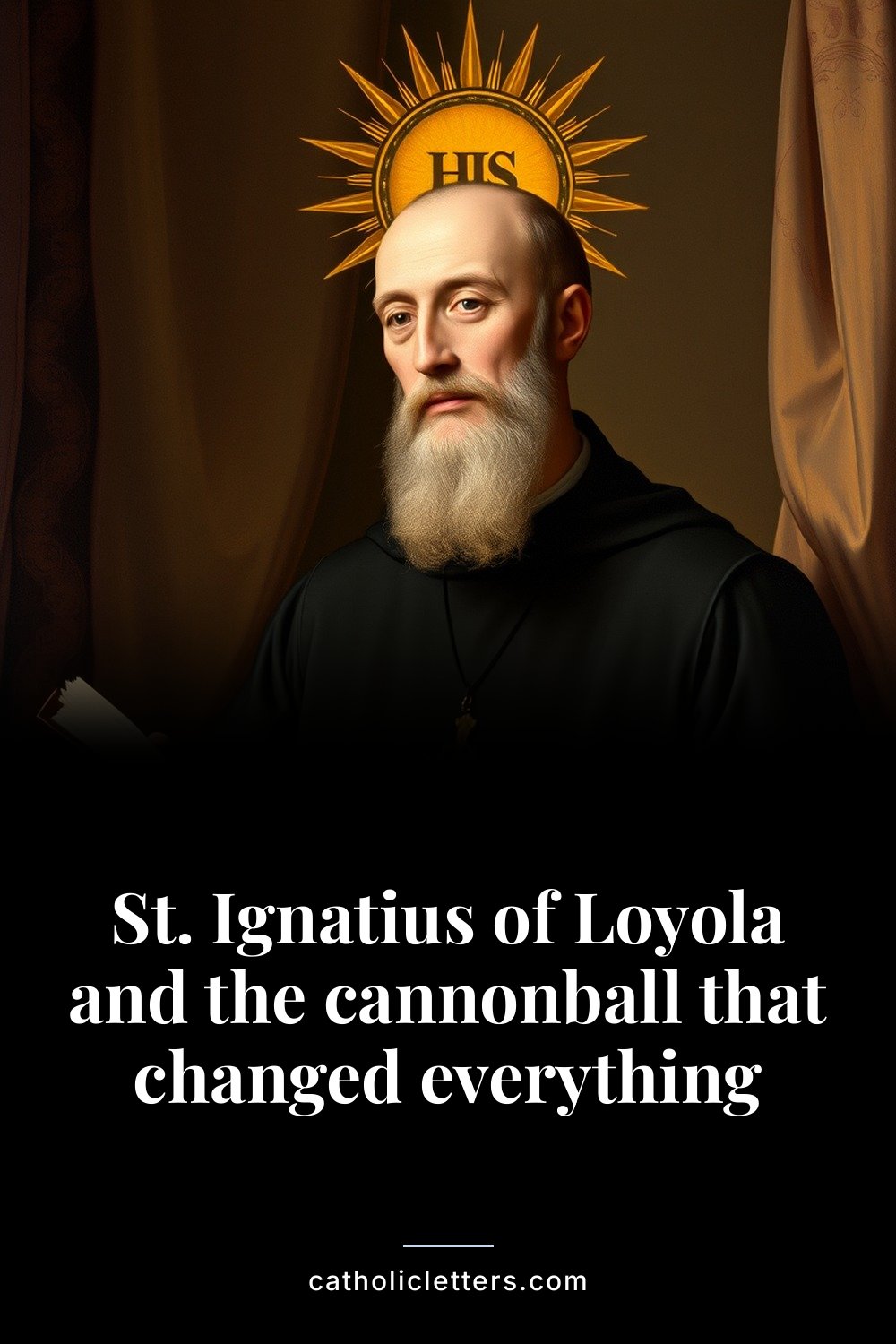
The Society of Jesus grew into the Church’s largest religious order, known for education, missionary work, and intellectual rigor. The IHS Christogram with sun rays became the Jesuit emblem, summarizing Ignatius’s devotion to the Holy Name of Jesus. His cassock was plain black, reflecting the order’s original simplicity before they became associated with universities and theology.
For today
Try Ignatius’s method of noticing: recall a decision you made yesterday or a thought you entertained. Did it leave you with peace or restlessness? Dryness or consolation? He taught that God often speaks through these interior movements, not dramatic visions. Spend three minutes before bed tonight reviewing your day this way.
Ask St. Ignatius to teach you to notice where God is already moving.