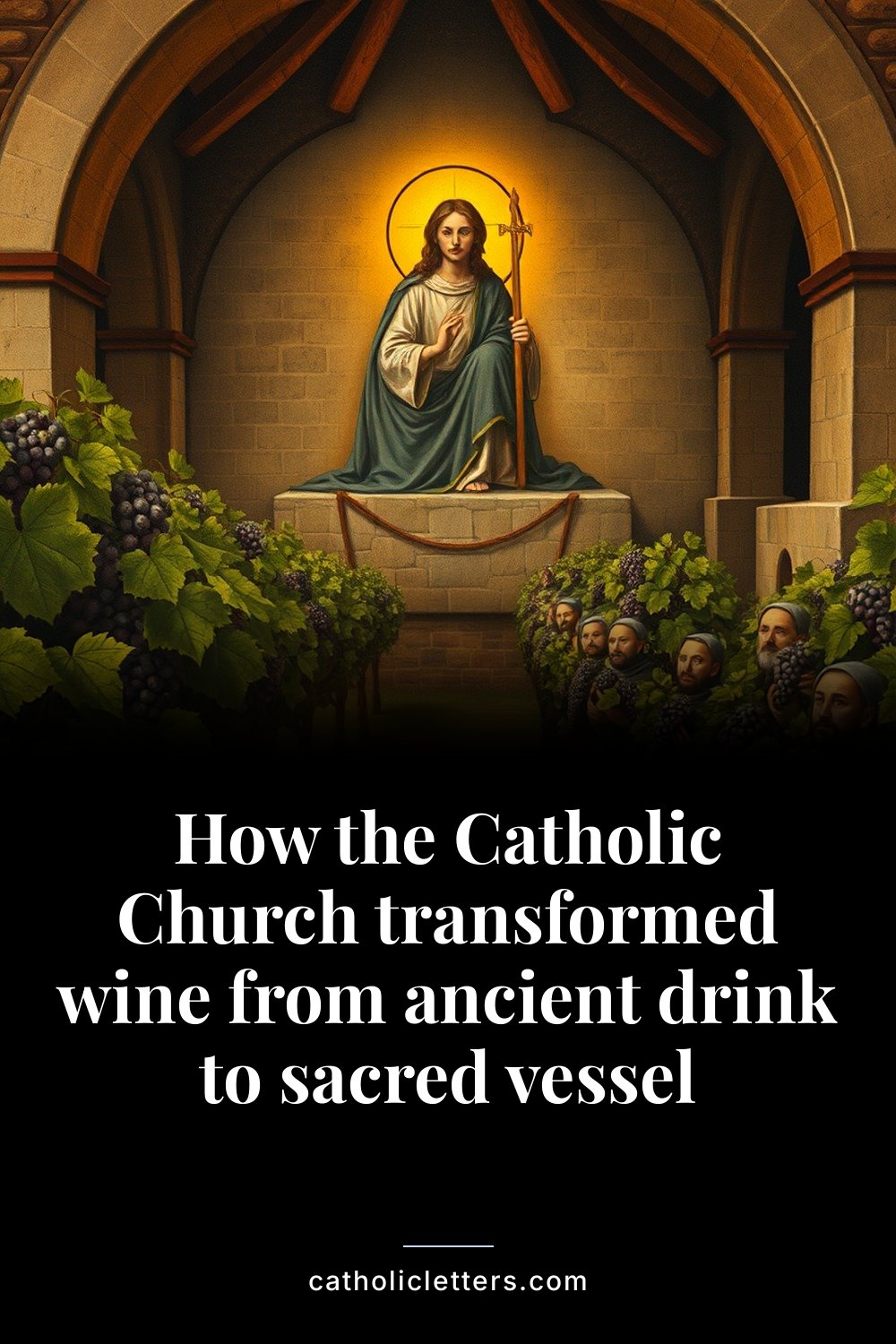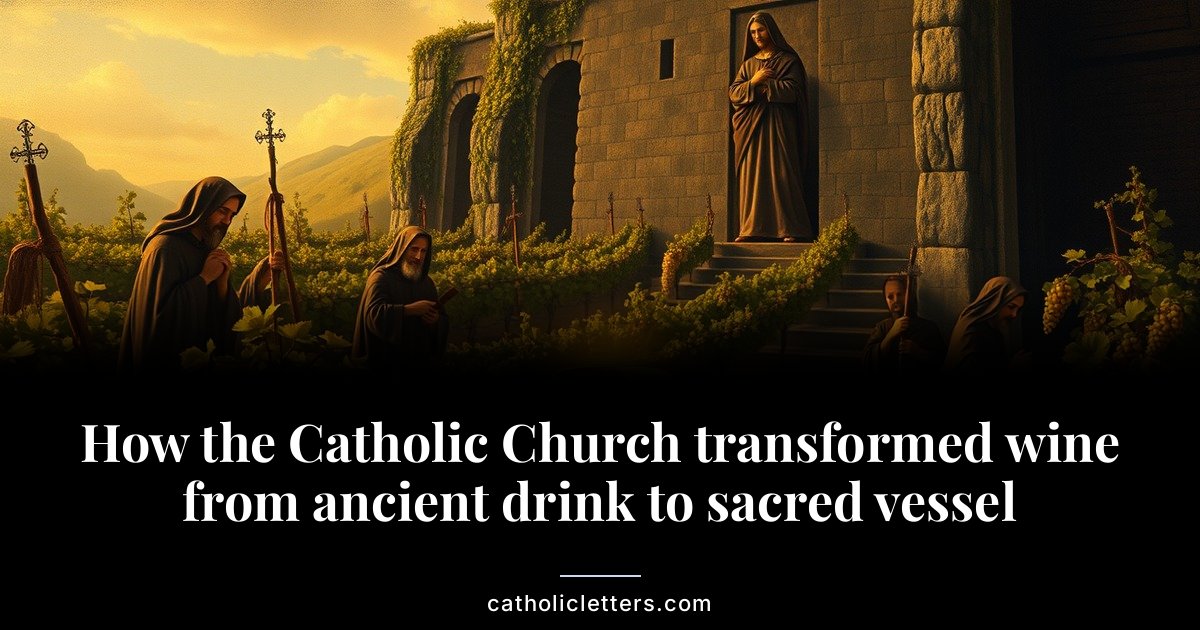
Wine existed thousands of years before the first Christian was baptized. Archaeological evidence from the Caucasus region dates winemaking to at least 6,000 BC. The Egyptians, Greeks, and Romans all developed sophisticated wine cultures. But what the Catholic Church did with wine is the more interesting story, and Aleteia’s brief history traces that transformation from ancient beverage to sacramental center of Western civilization.
What happened
The article outlines how Christianity inherited wine from the ancient world but radically reoriented its meaning. Christ chose wine as the matter of the Eucharist at the Last Supper, elevating an everyday drink into the vessel of His Blood. What had been a commodity became a sacrament.
From that moment, the Church became wine’s primary guardian in Europe. Monasteries preserved viticulture through the collapse of Rome. Benedictine and Cistercian monks mapped terroir, refined techniques, and established the great wine regions we know today: Burgundy, Champagne, the Mosel Valley. They did not do this for profit or pleasure alone. They did it because the Mass required wine, and the Mass required it to be good.
For the full historical arc, read Aleteia’s original article.
Why this matters
The Catholic transformation of wine is a case study in how sacramental theology shapes culture. The Church did not invent wine, but it made wine matter in a new way. Because the Eucharist required it, wine could not be abandoned during the Dark Ages when so much else was lost. Because the Mass required it to be pure and worthy, monks became chemists and agronomists. The result is that European wine culture, from Bordeaux classifications to German Riesling, is inseparable from Catholic sacramental practice.
This is not incidental history. It demonstrates a principle: what the Church holds sacred, it preserves and perfects. The same instinct that saved wine also saved manuscripts, music, architecture, and entire languages. The sacramental imagination does not despise matter. It elevates it.
For Catholic readers
The next time you attend Mass, notice the wine. It is not grape juice or a symbol. It is the fruit of millennia of cultivation, much of it done by monks who understood that the matter of the sacrament deserved their best work. That same principle applies to your preparation for receiving the Eucharist: the Lord deserves your best attention, your best contrition, your best love.
Sources:
1. Aleteia — original article