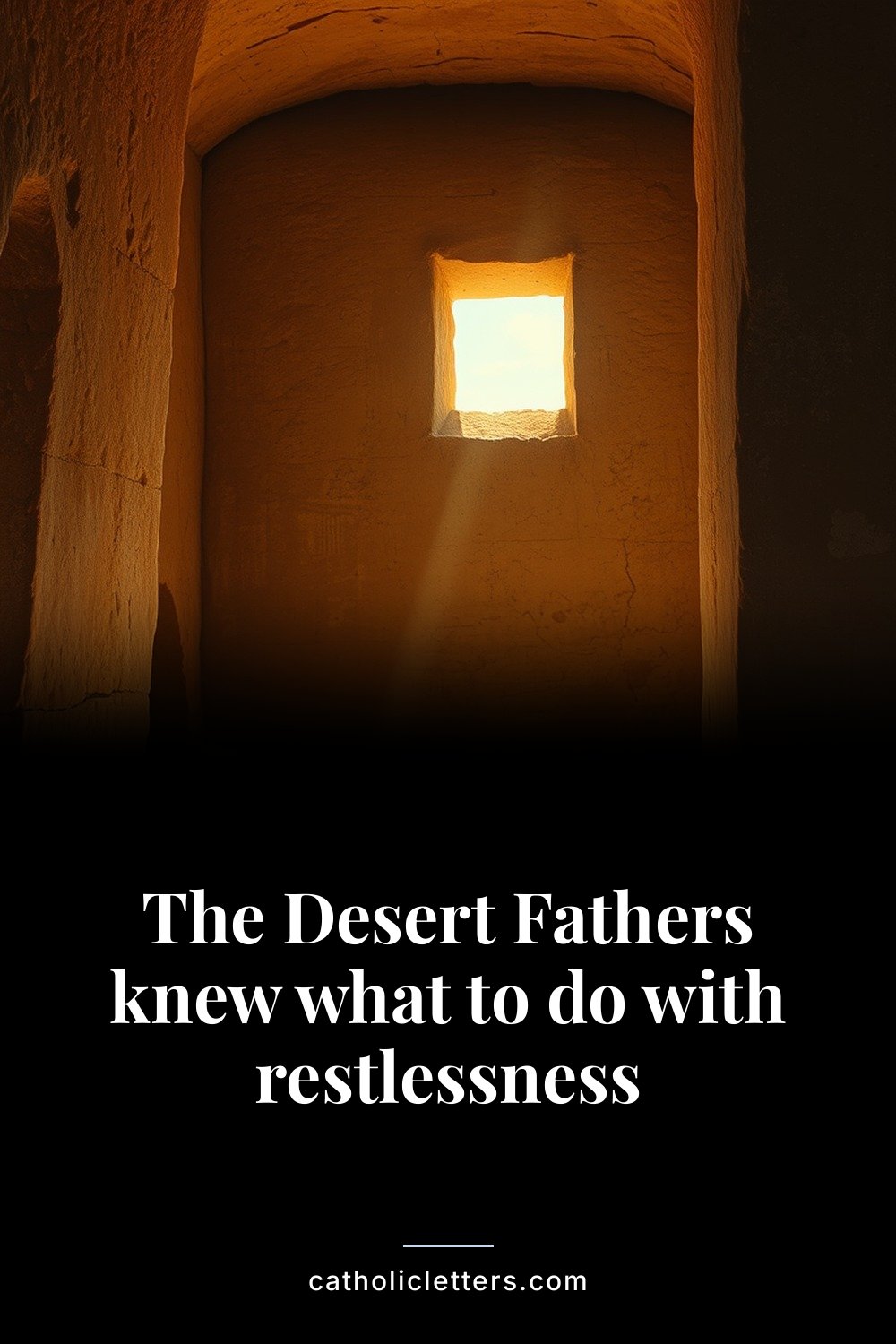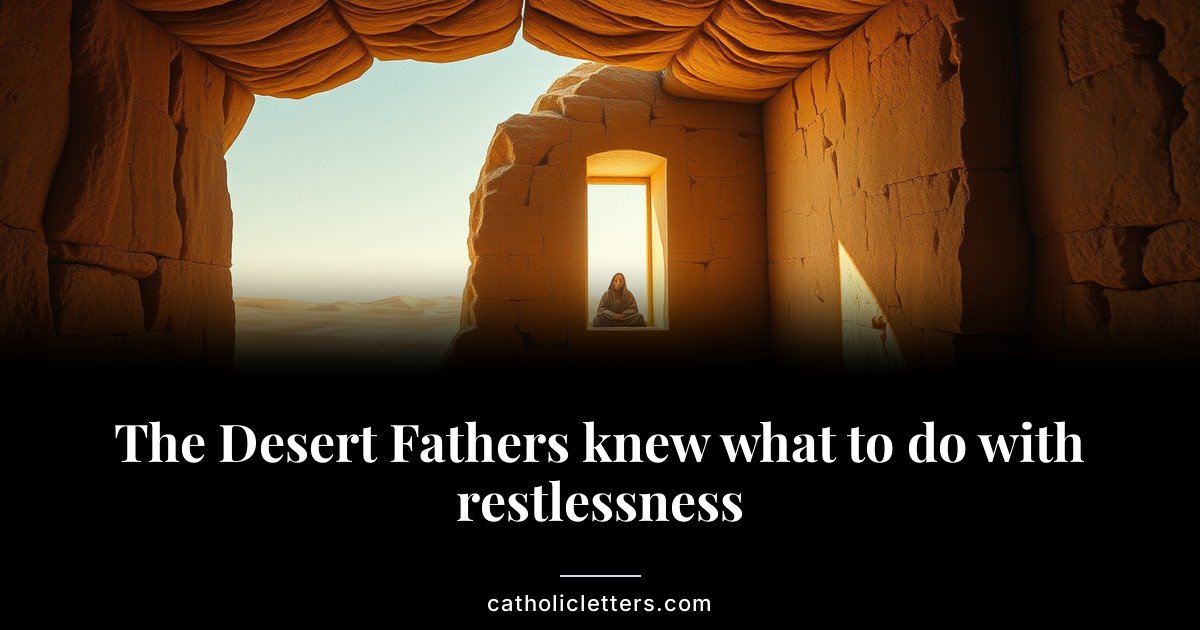
It comes in the middle of the day, in the heat. A monk in his cell feels a creeping restlessness, an inability to stay, to pray, to work, to read. He looks out the window. He looks again. He decides he would do more good somewhere else. The Desert Fathers, those fourth-century monks who fled to the Egyptian and Syrian deserts, had a name for this: acedia. Aleteia’s reflection on the Desert Fathers’ wisdom reminds us that this ancient spiritual battle is alive in every long, hot day of our own lives.
What the Desert Fathers observed
Acedia, sometimes called the noonday demon, is not mere boredom or laziness. It is a spiritual listlessness, a temptation to abandon the place and work God has given you. The Desert Fathers wrote about it extensively. Evagrius of Pontus (d. 399) described it as the most oppressive of the eight evil thoughts. The monk afflicted by acedia finds his cell unbearable, his prayer fruitless, his brothers tiresome. He convinces himself that holiness lies somewhere else, in some other monastery, some other vocation, some other place.
John Cassian (d. 435) brought this teaching from the Egyptian desert to the West. He observed that acedia strikes hardest at midday, when the sun is highest and the day stretches endlessly. The monk grows physically restless. He paces. He stares at the sun’s position, willing it to move faster toward evening. He manufactures reasons to leave his cell, to visit another monk, to find some task that feels more urgent than the one before him.
The remedy the Desert Fathers prescribed was simple but not easy: stay in your cell. Do not flee. The restlessness will pass if you do not feed it with motion.
Why this matters
We do not live in desert cells, but acedia has not retired. It appears in the middle of a workday when your task feels pointless. It shows up in a marriage when the dailiness of love feels like drudgery. It strikes parents at home with small children on a long afternoon. It whispers that somewhere else, doing something else, you would be holier, happier, more useful. The diagnosis the Desert Fathers made seventeen centuries ago remains accurate: the problem is not your circumstances but the demon of restlessness.
The Catechism lists acedia among the capital sins, defining it as a form of sloth that refuses the joy proper to divine love (CCC 2094). It is a refusal to begin, a tiredness before the work is done. Modern psychology has rediscovered what the monks knew: that the urge to flee discomfort is often the moment when perseverance becomes most fruitful.
For Catholic readers
When restlessness strikes this week, name it. Call it acedia if that helps. Then do what the Desert Fathers did: stay where you are for ten more minutes. Do not check your phone, do not manufacture an errand, do not convince yourself that holiness is elsewhere. Pray one decade of the Rosary in the place you want to leave. The restlessness will not destroy you. The flight will.
Sources:
1. Aleteia — original reflection