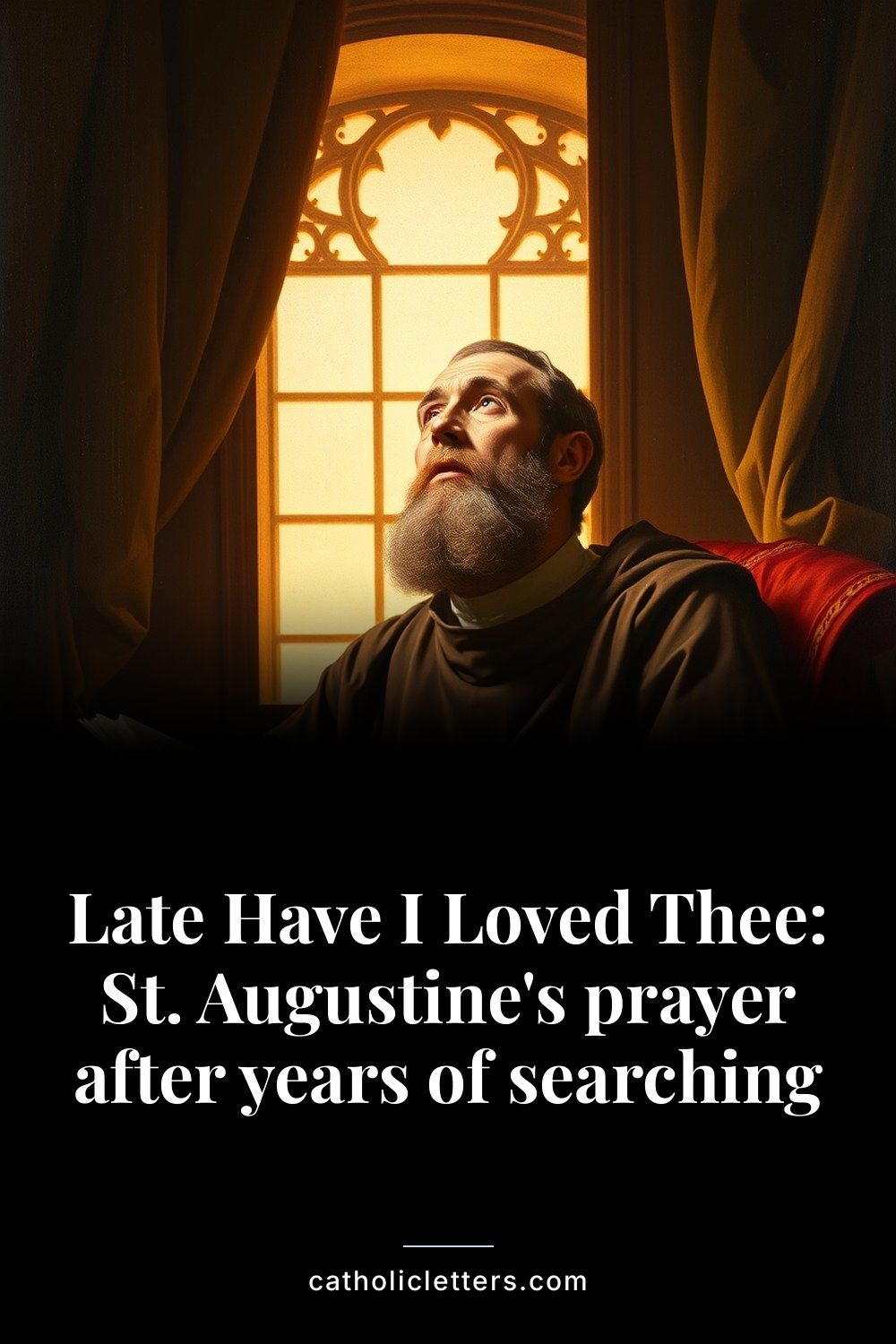
St. Augustine wrote this prayer near the end of his Confessions, looking back on decades spent chasing beauty in things that could never satisfy. If you’ve ever felt like you’ve been searching in all the wrong places, or that you’ve wasted years before finally seeing what was right in front of you, pray this today.
Late have I loved thee, O Beauty so ancient and so new; late have I loved thee. For behold thou wert within me, and I outside; and I sought thee outside and in my unloveliness fell upon those lovely things that thou hast made. Thou wert with me and I was not with thee. I was kept from thee by those things, yet had they not been in thee, they would not have been at all. Thou didst call and cry to me and break open my deafness; and thou didst send forth thy beams and shine upon me and chase away my blindness; thou didst breathe fragrance upon me, and I drew in my breath and do now pant for thee; I tasted thee, and now hunger and thirst for thee; thou didst touch me, and I have burned for thy peace.
St. Augustine of Hippo, Confessions Book X, c. 397-400 AD
How this prayer works
Augustine is recognizing God as the Beauty he’d been hunting all along. He’d spent his twenties and thirties chasing pleasure, acclaim, intellectual systems, anything that glittered. God was already inside him, closer than his own breath, but Augustine kept looking outward. The prayer moves through the five senses: God broke his deafness, chased his blindness, breathed fragrance, let him taste, touched him. Each sense had been numb until God woke it.
Augustine wrote the Confessions around 397-400 AD, about a decade after his baptism by St. Ambrose in Milan. This passage from Book X is part autobiography, part theological reflection on memory and desire. It’s not a petition but a confession in the old sense: a public acknowledgment of what God has done.
Pray it when you’re tired of looking for satisfaction in things that can’t hold it. Let each sensory image settle: deafness broken open, blindness chased away, fragrance breathed in. Augustine doesn’t ask for anything here. He simply admits that he’s been found, late as it is, and that now he burns for the peace he’d been running from.
Carry it through this morning, especially if regret is loud today.