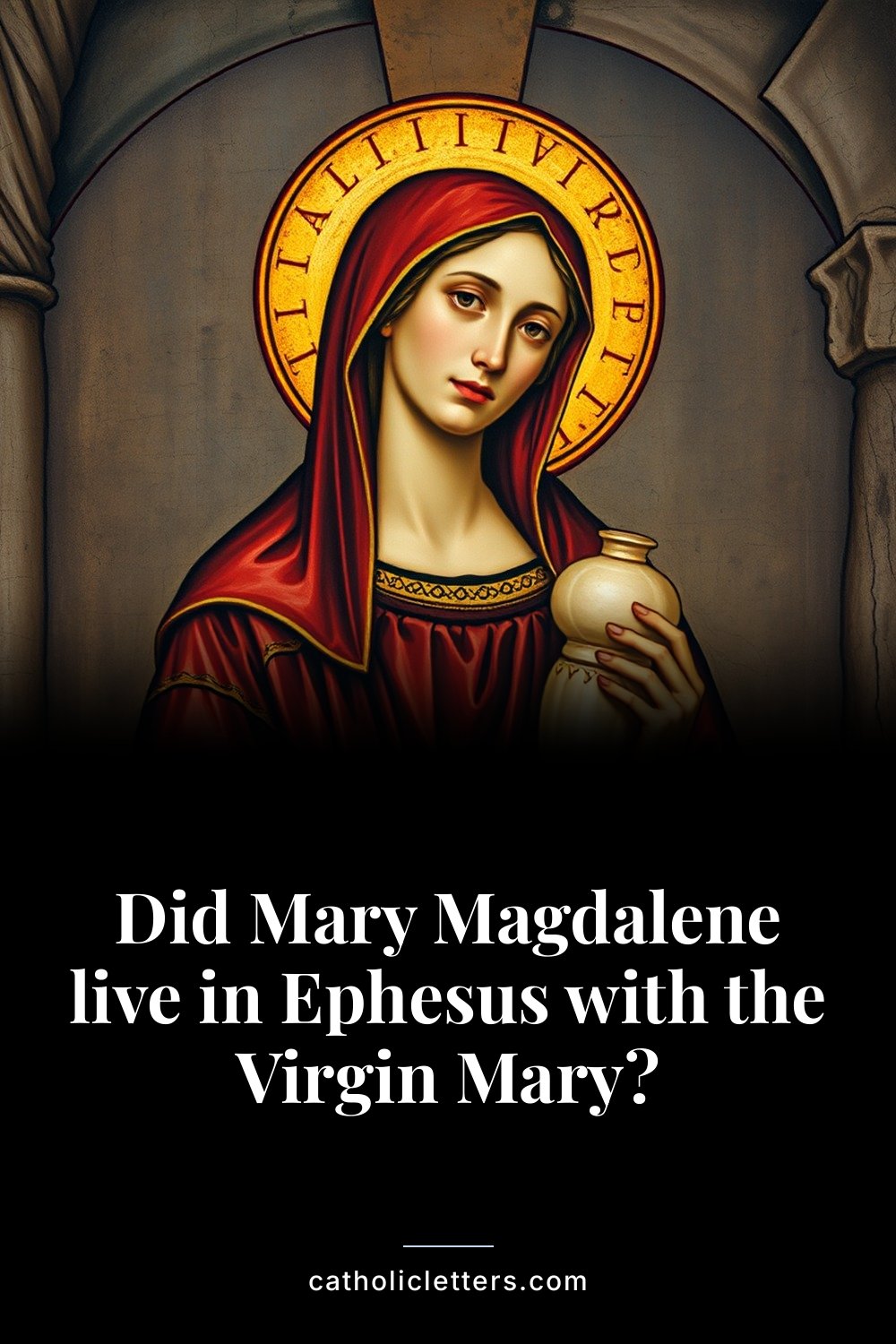
The New Testament tells us nothing about St. Mary Magdalene’s life after the Resurrection. The last we hear of her is on Easter morning, when she became the first witness to the Risen Christ. What happened next? Aleteia explores two competing traditions, neither of which can be verified historically, but both of which have shaped Catholic devotion for centuries.
What happened
Two traditions claim to know where Mary Magdalene spent her final years. The Eastern tradition places her in Ephesus, in modern-day Turkey, living near the Virgin Mary and St. John the Apostle. The Western tradition sends her to Provence, in southern France, where she supposedly spent decades in contemplative solitude before dying at Saint-Maximin-la-Sainte-Baume.
Neither tradition appears in Scripture. The Gospel accounts end with Mary Magdalene at the empty tomb. Acts mentions her by name nowhere. The competing stories emerge from local devotions and medieval hagiographies, not apostolic testimony.
The Ephesus tradition draws support from the belief that St. John brought the Virgin Mary to Ephesus after the Crucifixion, as recorded in local Eastern Christian memory. If Mary Magdalene traveled with them, no contemporary source records it. The French tradition became popular in medieval Provence, where relics venerated as hers were enshrined at Saint-Maximin. In 1969, the Church removed the conflated medieval legends of Mary Magdalene (mixing her with Mary of Bethany and the unnamed sinful woman) from the Roman Martyrology, but made no ruling on where the historical Magdalene died.
Why this matters
The silence of Scripture reminds us how little we know about the lives of most apostolic witnesses. Many early Christians, including women who followed Jesus from Galilee, disappear from the written record after Pentecost. Their anonymity does not diminish their witness. It tells us the apostles wrote to proclaim Christ, not to preserve biography.
The Church has never required belief in either Ephesus or Provence. Both traditions are pious, neither is binding. What is binding is the Gospel testimony: Mary Magdalene saw the Risen Lord, heard Him speak her name, and carried that message to the apostles. That much we know because the Holy Spirit inspired it to be written down.
For Catholic readers
St. Mary Magdalene’s feast day is July 22. Whether she died in Ephesus, Provence, or somewhere unrecorded, her witness to the Resurrection stands. Pray for the grace to bear witness as she did, not through certainty about every historical detail, but through encounter with the Risen Christ.
Sources:
1. Aleteia