Today’s Mass readings give us two scenes of desperation met with mercy. In the First Reading, King Hezekiah lies dying, prays in tears, and receives fifteen more years. In the Gospel, Jesus defends his hungry disciples against the Pharisees who accuse them of Sabbath-breaking. The thread connecting them: God’s law exists to preserve life, not to deny it.
What today’s readings give us
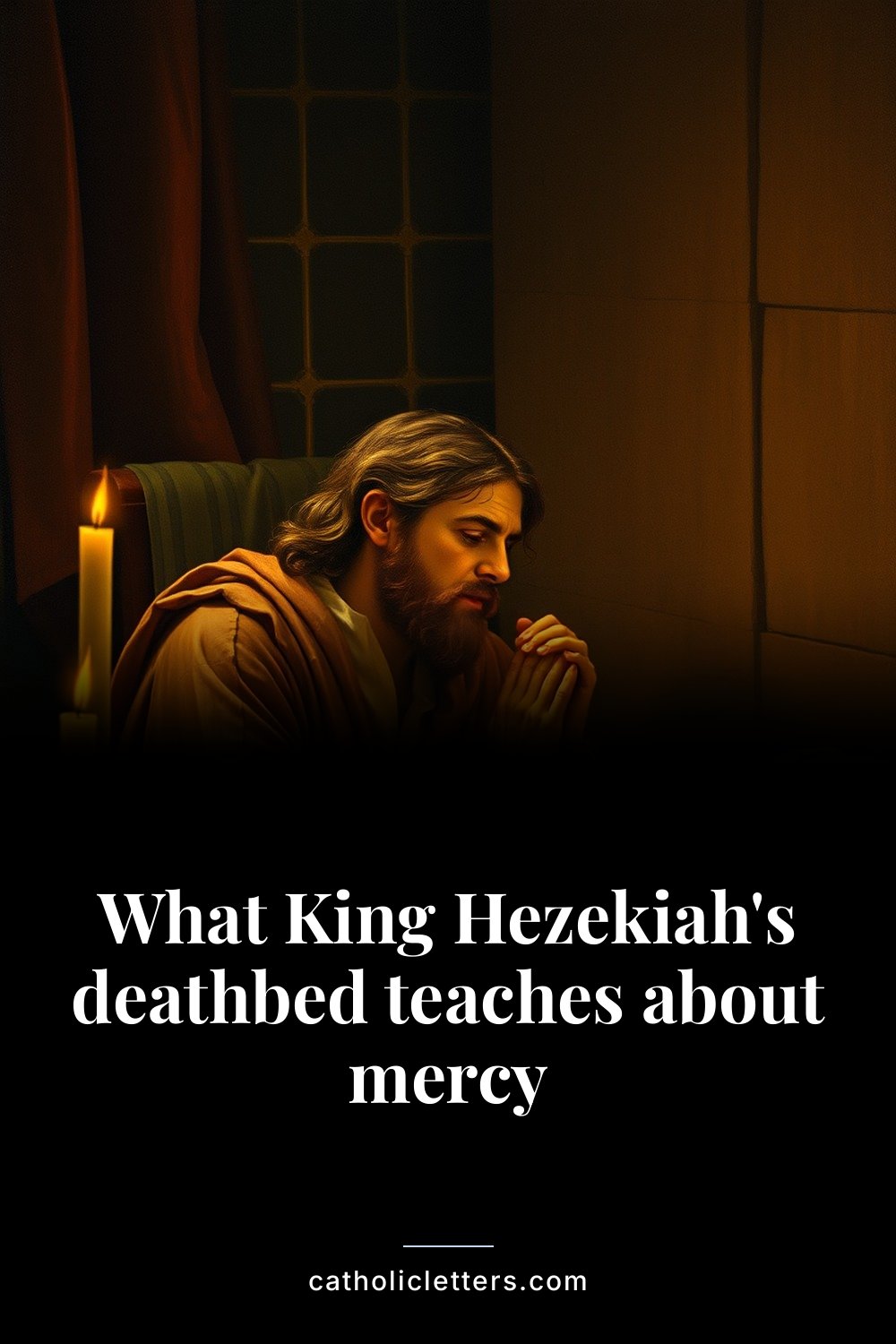
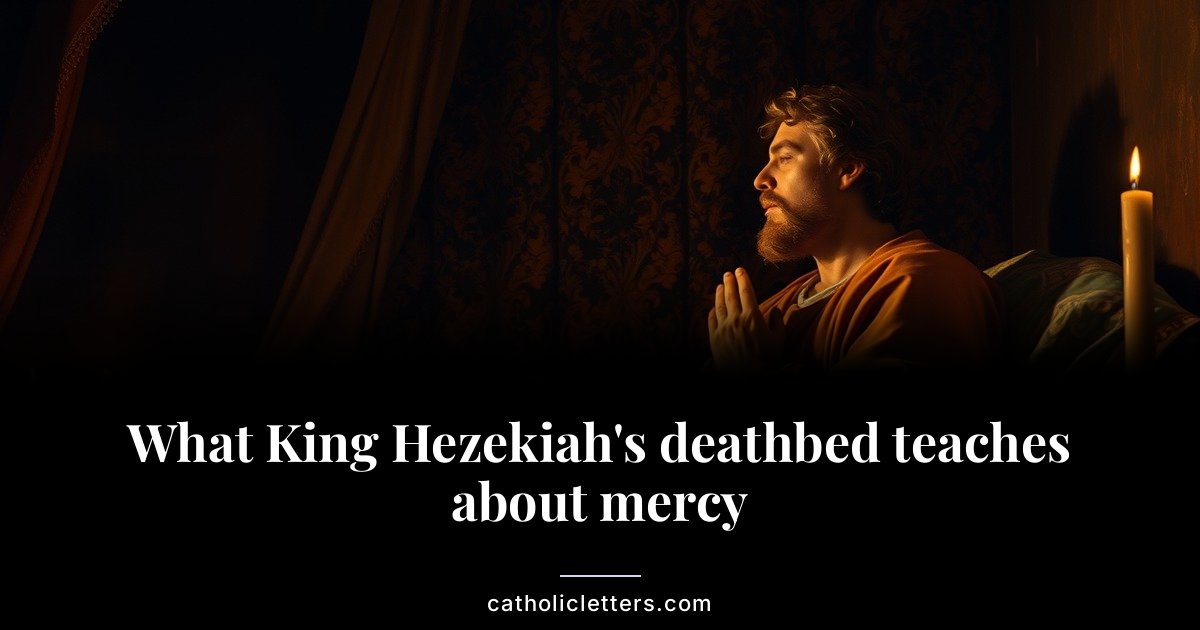
The First Reading comes from Isaiah 38, where Hezekiah, king of Judah, receives a terminal diagnosis from the prophet Isaiah. He turns his face to the wall and weeps, reminding God of his faithfulness. Before Isaiah leaves the palace, God reverses the sentence and adds fifteen years to Hezekiah’s life. The sign: the sun’s shadow moves backward ten steps on the stairway of Ahaz.
The Gospel takes us to a grain field on the Sabbath. The disciples are hungry. They pluck heads of grain and eat. The Pharisees see labor where Jesus sees need. He answers them with David eating the showbread reserved for priests and with the temple priests who work on the Sabbath without guilt. Then the line: “If you had known what this means, ‘I desire mercy, and not sacrifice,’ you would not have condemned the guiltless.”
The line worth carrying with you
The passage Jesus quotes comes from Hosea 6:6, and it appears twice in Matthew’s Gospel because it unlocks everything. The Pharisees see the disciples breaking Sabbath rest. Jesus sees hungry men and a God who wants them fed. The law was given to guard human life, not to strangle it. When religious observance crushes mercy, the observance has failed.
Hezekiah’s story makes the same point from the other direction. He is not asking God to ignore the law of mortality. He is asking God to be who God is: the one who hears prayer, who sees tears, who changes outcomes when a human heart turns toward him. God’s answer is not an exception to divine order. It is divine order at work. Mercy is not God’s occasional mood. It is his nature.
For today
Before bed tonight, read Isaiah 38:1-6 slowly. Notice how quickly God reverses his own prophet’s message. Let that sit with you: the God who made the law is the God who bends toward the one who prays. Today’s full readings are at USCCB.