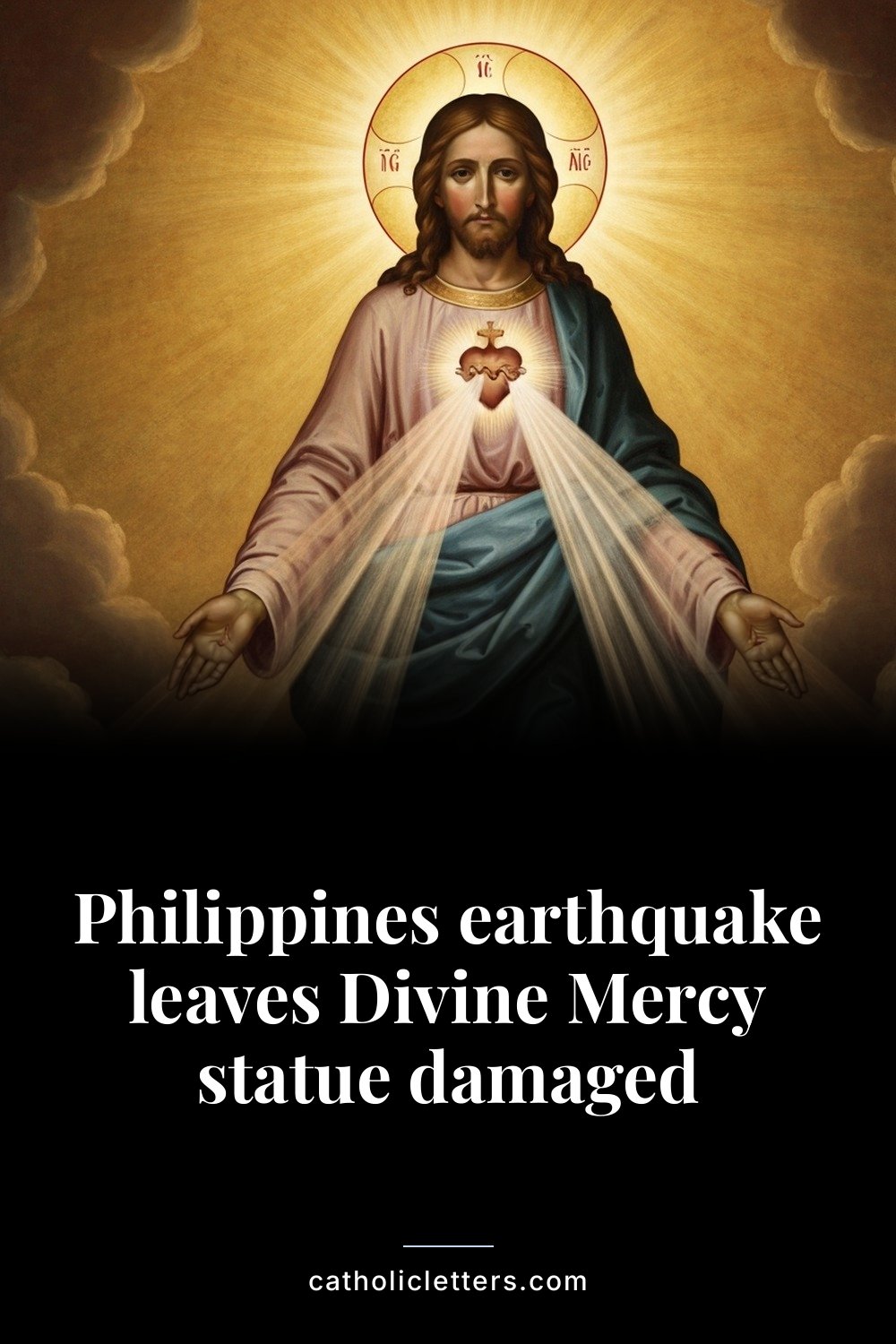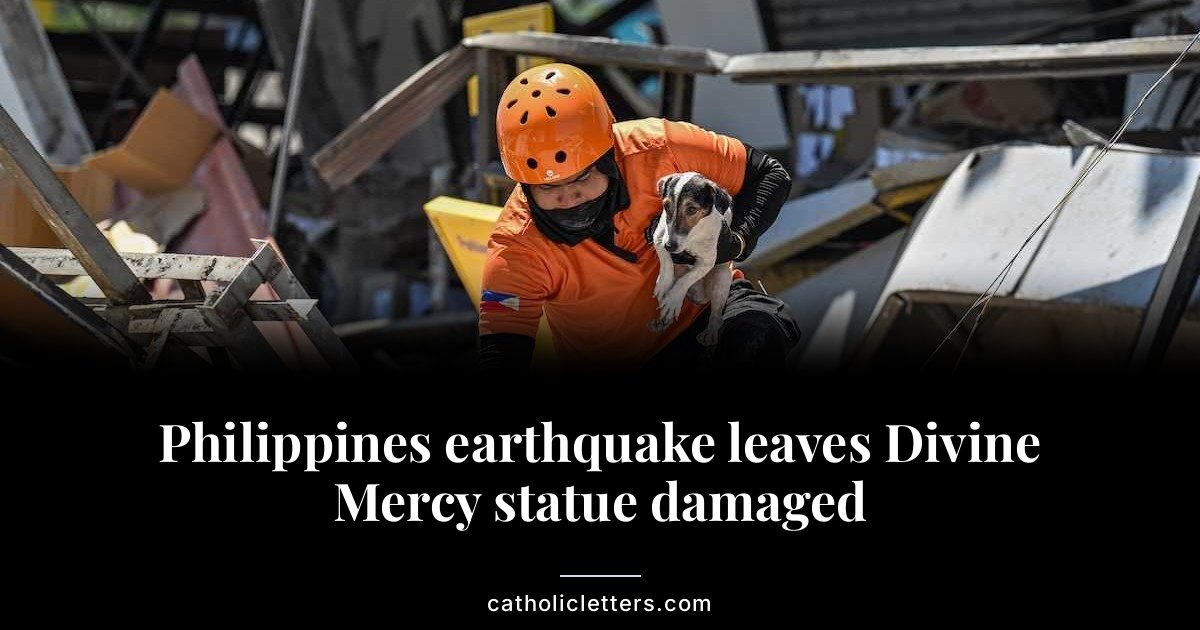
A powerful earthquake struck the Philippines on Monday, June 6, 2026, leaving widespread destruction across multiple provinces. Among the rubble, rescue workers discovered a damaged statue of the Divine Mercy with its head broken off. Aleteia reports on the image and what it might mean for Catholics responding to the disaster. For readers unfamiliar with the region, this is the latest in a series of seismic events that have tested Filipino communities in recent years.
What happened
The earthquake registered significant damage across the central Philippines. Early reports indicate casualties and structural collapses in several towns. Among the damaged buildings was a church or chapel housing a devotional statue of the Divine Mercy, the image of Christ popularized by St. Faustina Kowalska in the 1930s.
The statue now stands headless, its torso intact but its face gone. Photographs of the damaged statue have circulated among Filipino Catholic communities online. The visual is jarring: Christ, whose image represents mercy, bearing the literal wounds of this natural disaster.
For full details on the earthquake and response efforts, see Aleteia’s report.
Why this matters
Catholics have long seen the hand of providence in natural events, not as direct punishment but as occasions for deeper conversion. The damaged Divine Mercy statue offers a concrete meditation: Christ suffered, and Christ suffers still in the members of His Body. The statue’s condition is not a theological statement, but it is a pastoral opportunity. The Divine Mercy devotion centers on trust in God’s mercy and mercy toward neighbor. Both are needed now in the Philippines.
The Philippines is one of the most Catholic nations on earth, with over 80 million baptized faithful. Natural disasters are frequent there, and the Church’s role in relief work is substantial. This earthquake is not unprecedented, but each one tests the community’s capacity for resilience and charity.
For Catholic readers
Pray for the earthquake victims and for relief workers in the affected provinces. If you are able, consider donating to Catholic Relief Services or a Filipino diocesan relief fund. Read or re-read the Diary of St. Faustina (available at most Catholic bookstores) to deepen your understanding of the Divine Mercy message, which calls us to trust and to show mercy to others, especially in their suffering.
Sources:
1. Aleteia — original report