St. Benedict of Nursia gets a memorial today, July 10. He wrote 73 chapters that turned scattered hermits into communities, communities into builders, and builders into the backbone of medieval Europe. If you’ve ever needed a sustainable rhythm for prayer and work, Benedict wrote the book.
Who St. Benedict of Nursia was
Benedict was born around 480 in Nursia, central Italy, into a world collapsing around Roman ruins. He studied in Rome, fled the city’s corruption as a young man, and lived three years as a hermit in a cave at Subiaco. Disciples gathered. He founded twelve small monasteries, then moved to Monte Cassino around 529 and established the monastery that became the mother house of Western monasticism.
He died around 547. The Lombards destroyed Monte Cassino in 577, but his Rule survived, copied and carried across Europe by monks who rebuilt civilization one scriptorium at a time. Pope Paul VI named him patron of Europe in 1964.
What he’s known for
The Rule of St. Benedict is 73 short chapters on how to live in community under an abbot, balancing ora et labora (prayer and work) into a humane, stable daily order. It won because it was moderate. Benedict distrusted extremes. He wanted monks who prayed the hours, worked with their hands, read Scripture daily, ate enough, slept enough, and stayed put.
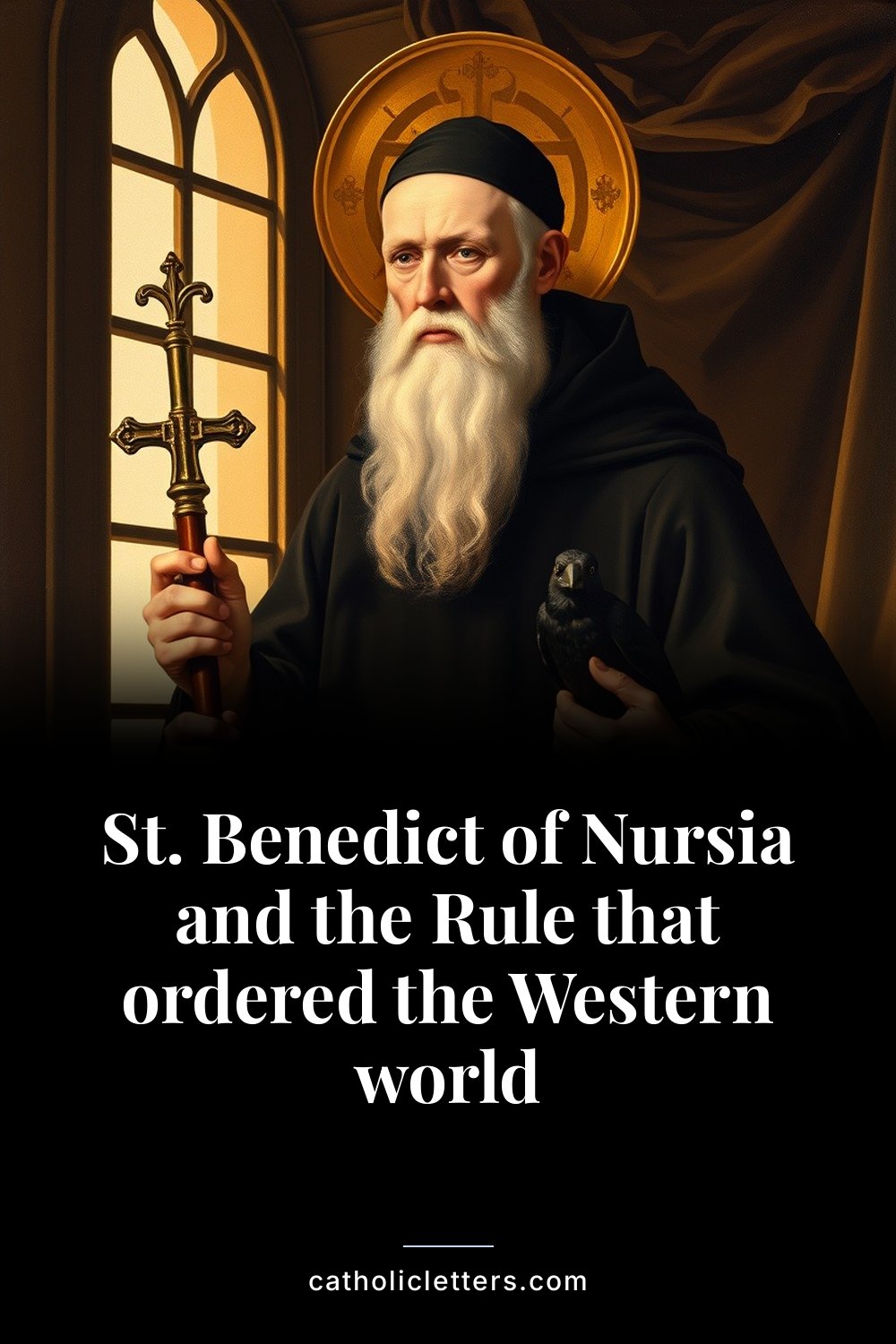
That raven with bread in his hand comes from St. Gregory’s Dialogues: a jealous priest sent Benedict poisoned bread, and a raven carried it away at Benedict’s command. The broken cup refers to another attempt to poison him. The cup shattered when he blessed it. These stories say something true: Benedict’s life was under threat, and his response was not revenge but prayer and flight to a better foundation.
For today
Try Benedict’s opening move from the Rule: “Listen carefully, my son, to the master’s instructions, and attend to them with the ear of your heart.” Set a timer for five minutes. Sit. Listen without an agenda. Not to solve, not to plan. Just to hear what rises when you’re quiet. Benedict built everything on that posture.
Let stability be the test of what you build today.
Further reading: The Rule of St. Benedict (full text widely available online)