Today the Church celebrates the Nativity of the Blessed Virgin Mary, a feast that marks one of the oldest Marian commemorations in the Christian calendar. This day honors the birth of the woman who would become the Mother of God, born to Anne and Joachim in fulfillment of God’s ancient promise. For a reader in 2026, this feast reminds us that God’s greatest works often begin in hiddenness, in ordinary homes, with ordinary people saying yes.
Who Mary was before the Annunciation
Mary was born in the first century BC to Anne and Joachim, pious Jews living in Palestine. The Scriptures do not record her birth, but the Church’s tradition, drawing from the Protoevangelium of James (a second-century text), places her nativity in a context of faithful waiting and divine preparation. Anne and Joachim had been childless for years, a source of sorrow in their culture, before God answered their prayers with a daughter.
From her conception, Mary was preserved from original sin by a singular grace, what we call the Immaculate Conception. She was being prepared, body and soul, to become the dwelling place of God himself. Her birth was not marked by thunder or visions visible to the world. It was quiet, domestic, and hidden.
Yet this birth changed everything. The woman born on this day would, some fourteen or fifteen years later, stand before an angel and say, “Be it done unto me according to thy word” (Luke 1:38, Douay-Rheims). Salvation history hinged on her yes, and that yes was only possible because of who she had been made to be from the moment she drew breath.
What this feast celebrates
The Nativity of Mary is one of only three birthdays the Church celebrates liturgically (the others being Christ’s and John the Baptist’s). This tells us something: her birth was not merely biographical, but theological. God was acting. The early Church recognized this, establishing the feast by at least the sixth century in Jerusalem, and it spread throughout Christianity by the eighth century.
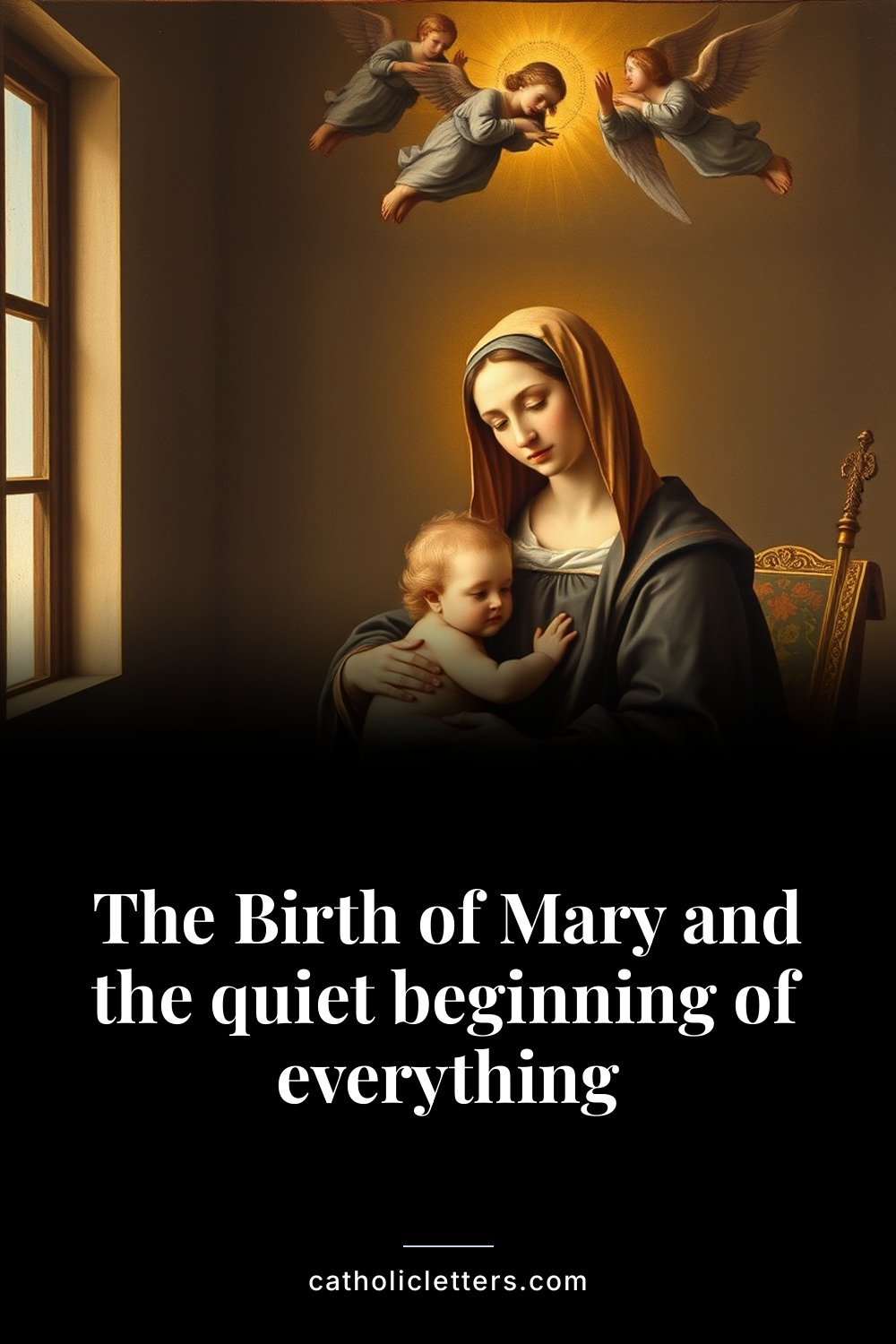
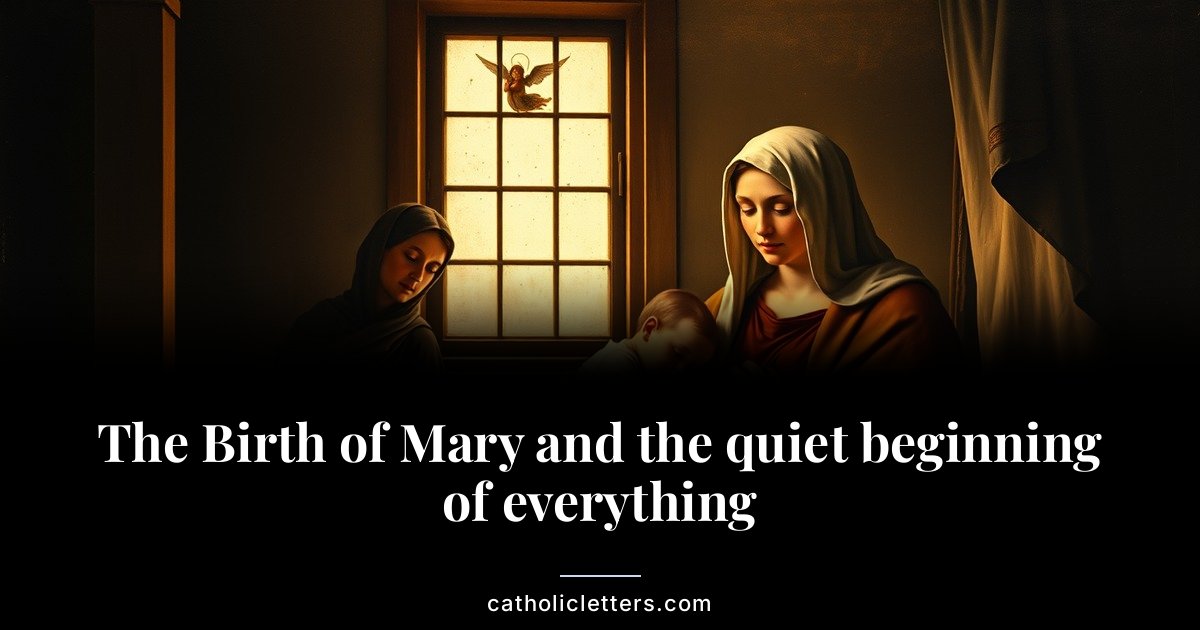
In sacred art, Mary’s birth is often depicted as a gentle domestic scene: Anne reclining after childbirth, midwives attending, and sometimes angels hovering at the edges, witnesses to the quiet miracle. The attributes of this feast include the infant Mary herself, her mother Anne, and the atmosphere of tender preparation. These images remind us that holiness is born in homes, in the patient love of parents, in the small rhythms of family life.
The feast also connects to Anne, whose own faithfulness made her the grandmother of God. Her long waiting, her prayers, her willingness to trust when trust seemed foolish, these prepared the ground for Mary’s yes.
For today
Consider one quiet act of preparation in your own life today. Mary’s parents did not know they were raising the Mother of God, yet they raised her in faith and love. What small faithfulness are you called to today that might prepare the way for something far greater than you can see? Pray the Hail Mary once, slowly, and thank God for the hidden beginnings he works in every life.
Carry Anne’s patience and Mary’s quiet beginning through the day.