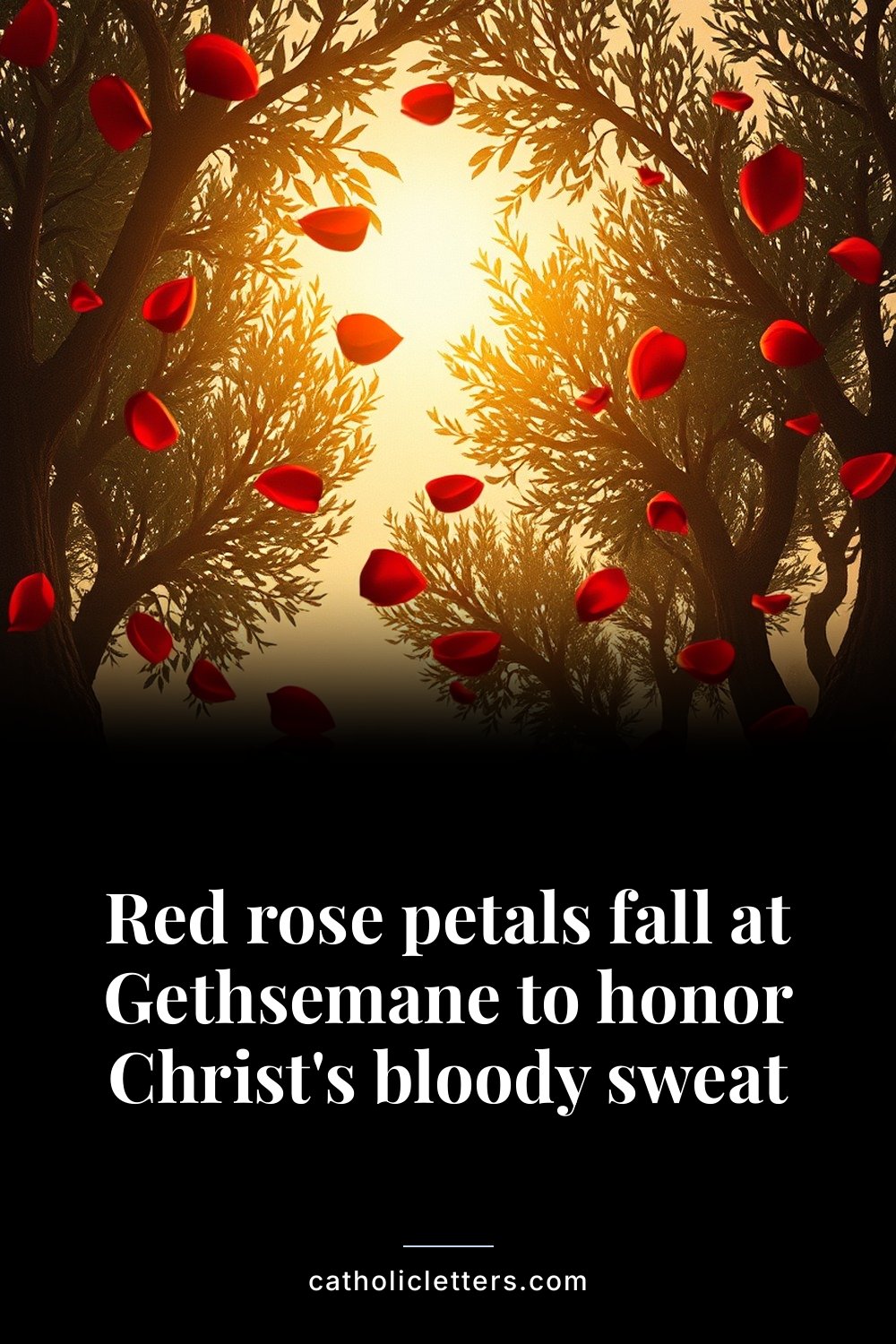
Every July 1, the Garden of Gethsemane in Jerusalem holds a unique liturgical observance: red rose petals shower down to represent the drops of blood Christ sweated before his Passion. Aleteia reports on this annual tradition, which stands as a liturgical exception in the modern calendar. For pilgrims present at the garden where Jesus prayed “Father, if you are willing, remove this cup from me” (Luke 22:42, RSV-CE), the falling petals offer a visual meditation on the Agony.
What happens at Gethsemane on July 1
The celebration at Gethsemane venerates the Precious Blood of Jesus on July 1, even though the universal Church calendar merged this feast with Corpus Christi in 1969. The tradition centers on Luke’s account: “And being in an agony he prayed more earnestly; and his sweat became like great drops of blood falling down upon the ground” (Luke 22:44, RSV-CE). Red rose petals descend during the liturgy to make visible what scripture describes.
This local observance persists as a liturgical exception, tied to the site itself. The universal Church dedicates the entire month of July to the Precious Blood, a devotional practice distinct from the feast day absorbed into Corpus Christi. The Gethsemane celebration bridges both: a local feast day honoring a universal devotion at the geographic location where the blood-sweat occurred.
Why this matters
Liturgical reforms after Vatican II consolidated and simplified the calendar, but exceptions like Gethsemane’s July 1 observance preserve local traditions rooted in biblical geography. The rose petals are not a Medieval invention or folk custom imported from Europe. They are a recent practice at the site of an ancient event, linking pilgrims directly to the Gospel narrative. The visual symbol helps worshipers pray through what the Catechism calls the beginning of Christ’s redemptive suffering, when “his human will adhered to the Father’s will” (CCC 612).
July’s dedication to the Precious Blood predates the 1969 calendar reform. It gained wide practice in the 19th century after Blessed Pius IX granted indulgences for the devotion. The month focuses prayer on Christ’s blood as the price of redemption: shed in the garden, at the pillar, under the thorns, on the cross. Gethsemane’s July 1 tradition fits within this larger devotional current.
For Catholic readers
July is the month to pray the Litany of the Precious Blood, a traditional prayer invoking Christ’s blood under various titles (“Blood of Christ, drink and laver of souls”). The Catechism’s treatment of the Agony (CCC 612) offers theological depth for meditation. If you cannot visit Gethsemane, the devotion travels: pray a decade of the Sorrowful Mysteries with attention to the first mystery, when fear and love contended in the garden.
Sources:
1. Aleteia — original report