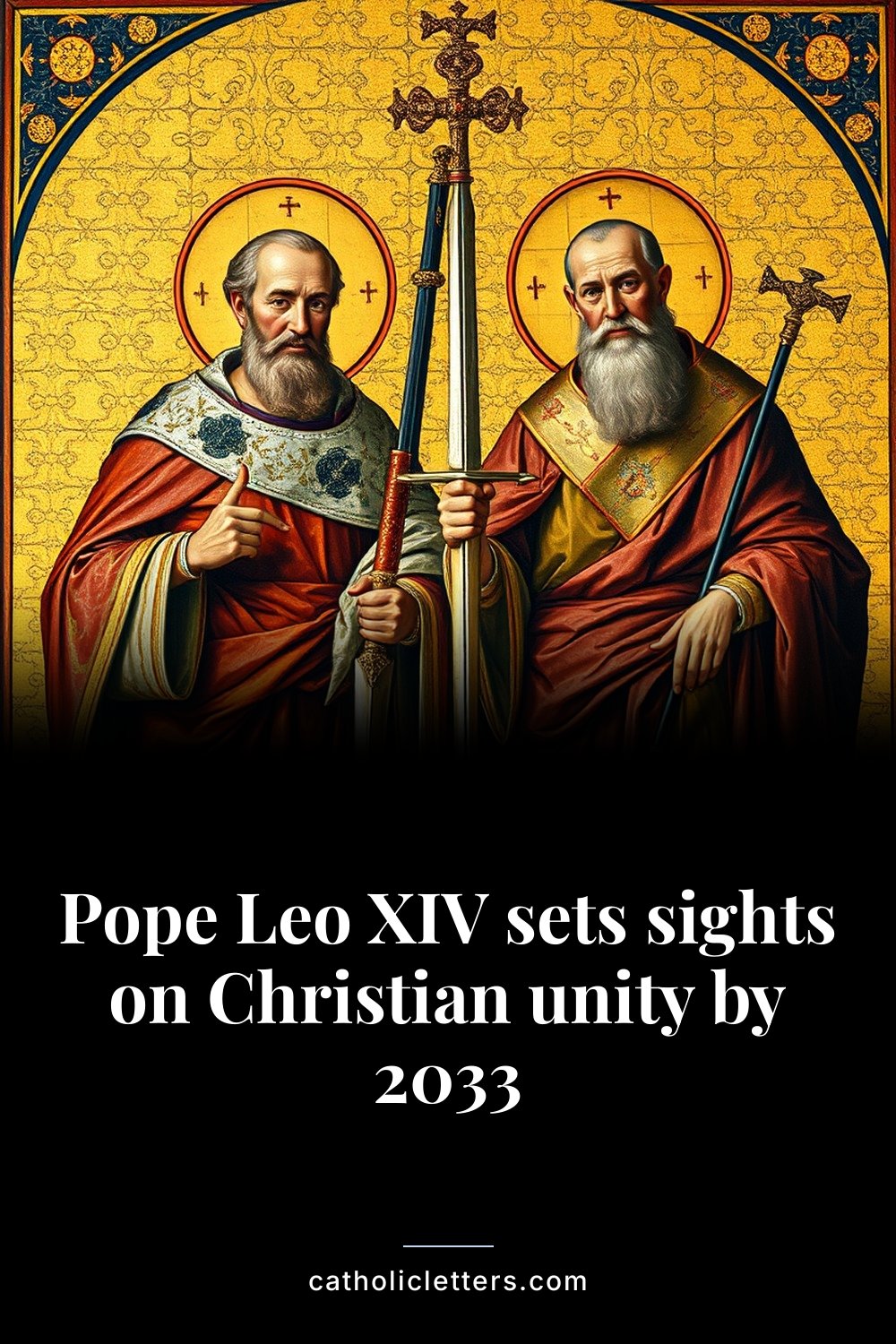
Pope Leo XIV told an Orthodox Christian delegation visiting Rome this week that he hopes all Christians will be united by 2033. The Pope made the remarks during the annual feast of Saints Peter and Paul, when Orthodox representatives traditionally visit the Vatican. Read the full report at Aleteia.
What happened
The Pope addressed the Orthodox delegation on June 29, recalling his visit to Constantinople last year for the feast of St. Andrew, patron of the Orthodox Church. That 2025 meeting coincided with the 1,700th anniversary of the Council of Nicaea, which produced the Nicene Creed that Catholics and Orthodox still share today.
Pope Leo told the delegation he sees 2033 as a target date for Christian unity. That year marks the 2,000th anniversary of Christ’s death and resurrection.
The annual exchange of delegations between Rome and Constantinople dates back to 1965, when Pope Paul VI and Patriarch Athenagoras lifted the mutual excommunications that had formalized the East-West Schism of 1054.
Why this matters
The Catholic-Orthodox split is the oldest and deepest division in Christianity. Rome and Constantinople were in full communion for a thousand years before theological and political disputes drove them apart. Both churches have valid sacraments, apostolic succession, and nearly identical beliefs about Christ, the Trinity, and the Eucharist. The remaining obstacles are primarily about papal authority and some liturgical differences.
Setting 2033 as a milestone gives ecumenical dialogue a concrete horizon. No Pope can unilaterally reunite the churches, but focusing on the 2,000th anniversary of the Paschal Mystery reminds Catholics and Orthodox that what unites them is older and deeper than what divides them.
For Catholic readers
Pray for Christian unity, especially during the Week of Prayer for Christian Unity each January. If you live near an Orthodox parish, consider attending Vespers on a feast day. The liturgy is in the same family as the Latin Mass. Learning what we share makes the divisions harder to accept.
Sources:
1. Aleteia — original report