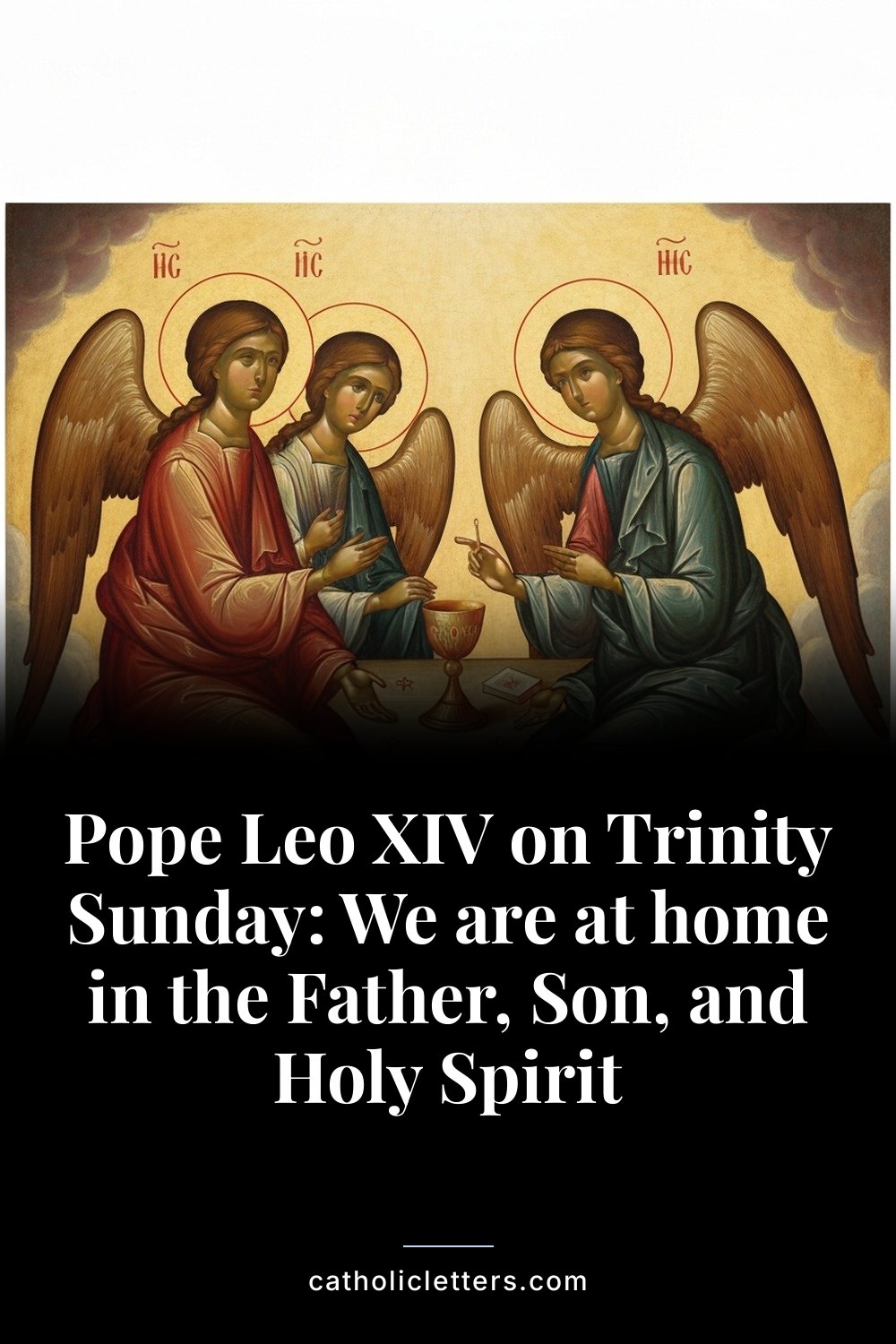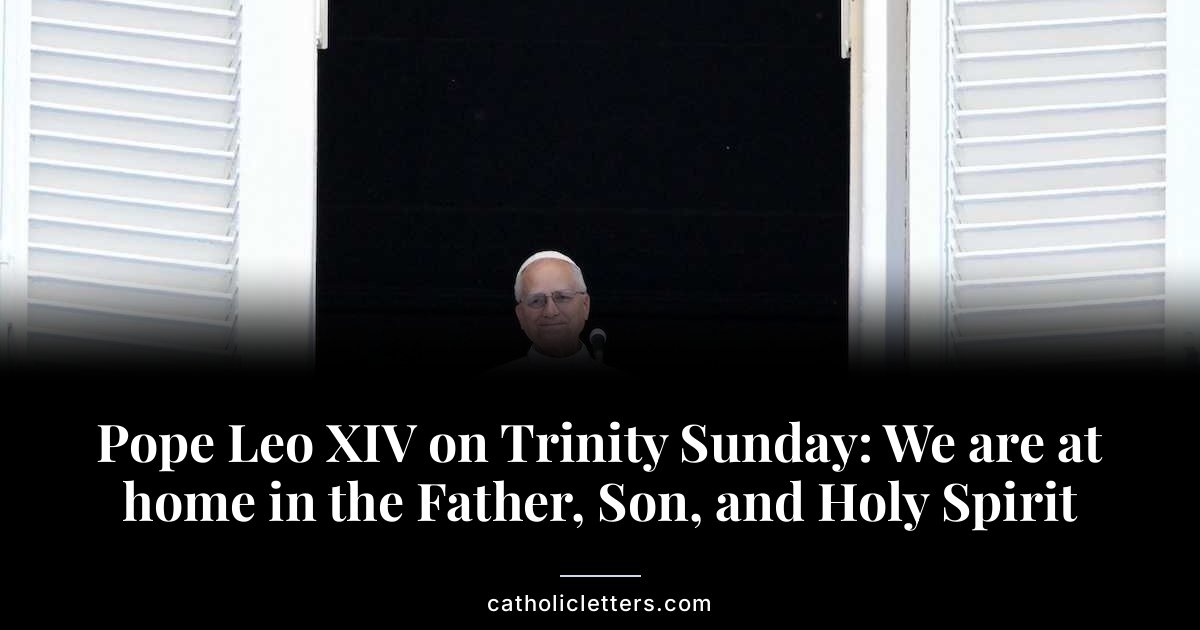
Pope Leo XIV offered a brief reflection on the mystery of the Holy Trinity during his Angelus address on May 31, reminding the faithful that “the Trinity helps us to love everyone and everything.” The Pope spoke to crowds gathered in St. Peter’s Square on Trinity Sunday, one of the Church’s major solemnities. You can read Aleteia’s full report here.
What happened
Speaking before the midday Angelus prayer, Pope Leo XIV addressed the meaning of Trinity Sunday for Catholic life. “Today, dear brothers and sisters, is a day of celebration,” he said, drawing attention to the feast that falls one week after Pentecost each year.
The Pope emphasized that the doctrine of the Trinity is not abstract theology but a lived reality. In the Father, Son, and Holy Spirit, he said, “we are at home.” His brief remarks connected the mystery of God’s inner life to the Christian vocation to love without boundaries.
Why this matters
Trinity Sunday has been observed since the fourteenth century as a universal feast, but Pope Leo’s framing brings the doctrine back to its pastoral core. The Trinity is not a puzzle to solve but the ground of Christian love. When we say God is a communion of persons, we are also describing what human life is meant to become.
The Pope’s emphasis on feeling “at home” in the Trinity recalls the Church Fathers’ teaching on theosis, the participation in divine life. It also counters a common misunderstanding that the Trinity is merely an intellectual problem for theologians. Leo XIV is reminding ordinary Catholics that this mystery shapes everyday charity.
For Catholic readers
This Trinity Sunday, consider praying the Athanasian Creed, one of the Church’s three ecumenical creeds and the one most focused on Trinitarian doctrine. It begins, “Whosoever will be saved, before all things it is necessary that he hold the catholic faith.” You can find the full text in the Catechism of the Catholic Church, paragraphs 232-267, which offers a readable summary of what we believe about the Trinity and why it matters for Christian life.
Sources:
1. Aleteia — original report